Table of contents
Related resources


Best AI Governance Platforms for Enterprises: Top 6 in 2026

What is an AI governance platform?
AI governance platforms provide enterprises with centralized oversight to manage AI risks, ensure regulatory compliance, and automate policy enforcement across the AI lifecycle. Leading solutions include security-oriented tools like Mend.io, HiddenLayer, and Prompt Security, as well as end-to-end governance platforms like IBM watsonx.governance and Microsoft Purview.
The primary goal of these platforms is to centralize oversight of the entire AI lifecycle, from data ingestion and model training to deployment and ongoing monitoring, enabling organizations to address risks such as bias, security vulnerabilities, and compliance violations. Enterprises gain structured visibility into their AI assets, workflows, and outcomes.
These platforms typically offer features such as audit trails, documentation, model versioning, and automated reporting to facilitate accountability and transparency. This oversight is critical as organizations scale AI initiatives, ensuring not only technical performance but also responsible and compliant use of AI technologies across different business units.
This is part of a series of articles about AI governance.
AI governance platforms at a glance
The table below summarizes the key differences between the platforms covered in this section. We explore each one in more detail further down.
| Platform | Primary focus | Best for | Key differentiator |
|---|---|---|---|
| Mend.io | Security and governance for AI you build: models, agents, and LLM apps | Security and AppSec teams governing in-house AI development | AI inventory and risk insights, red teaming, system prompt hardening with AIWE risk scoring, runtime guardrails, and AI governance policy engine |
| HiddenLayer | Protecting models and ML pipelines from AI-specific threats | Teams securing models pre- and post-deployment | Model scanning and runtime attack detection without accessing model internals |
| Prompt Security | Visibility and control over agentic AI and MCP activity | Organizations adopting AI agents and MCP integrations | Gateway-level inspection of every agent request and response, with shadow MCP detection |
| IBM watsonx.governance | End-to-end AI lifecycle governance and compliance | Large enterprises needing formal, auditable governance workflows | Automated compliance workflows across IBM and third-party models |
| Microsoft Purview | Data governance underpinning AI and analytics | Microsoft-centric enterprises governing data feeding AI systems | Metadata-driven governance via Data Map and Unified Catalog, without moving data |
| OneTrust AI Governance | AI risk, compliance, and program management | GRC and privacy teams operationalizing AI policy | Risk tiering built on EU AI Act, NIST, and ISO 42001 frameworks |
Why enterprises need AI governance platforms
A growing number of enterprises are moving AI from isolated experiments into core business processes. This shift increases risk, complexity, and regulatory exposure. AI governance platforms help manage these challenges in a structured way.
- Regulatory compliance requirements: Enterprises must comply with evolving regulations such as the EU AI Act and industry-specific rules. Governance platforms help track requirements, enforce policies, and generate audit-ready documentation.
- Risk management and mitigation: AI systems can introduce risks like bias, model drift, and security gaps. Governance tools provide monitoring and controls to detect and address these issues early.
- Scalability of AI operations: As the number of models grows, manual oversight becomes impractical. Platforms standardize workflows and enable consistent management across teams and projects.
- Transparency and accountability: Enterprises need clear visibility into how models are built and used. Features like audit trails and versioning make it easier to trace decisions and assign ownership.
- Cross-functional coordination: AI involves data scientists, engineers, legal teams, and business stakeholders. Governance platforms provide a shared framework that aligns these groups around common policies.
- Model lifecycle management: Managing models from development to retirement requires structured processes. Platforms centralize lifecycle management, reducing fragmentation and errors.
- Trust and reputation protection: Poorly governed AI can lead to public backlash or legal issues. Governance ensures responsible use, helping maintain customer trust and brand credibility.
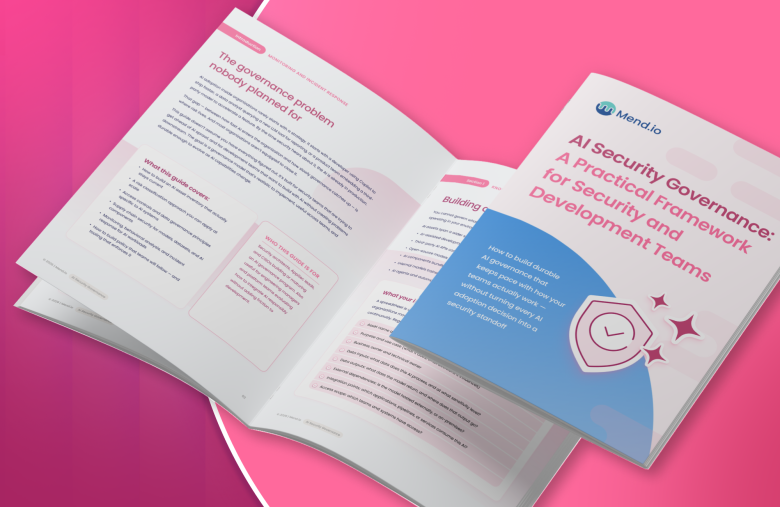
You can’t govern AI you can’t see
Build a governed AI inventory, classify risk by data sensitivity and decision authority, and score your maturity without slowing your teams down.
Key features to look for in enterprise AI governance platforms
Centralized governance dashboard
A centralized governance dashboard acts as the control center for an AI governance platform, aggregating critical information and controls into a single interface. This dashboard provides visibility into all AI assets, workflows, and policies deployed across the organization. It allows stakeholders, from data scientists to compliance officers, to monitor system health, review policy adherence, and track governance metrics in real time. Centralized dashboards streamline communication and decision-making by consolidating disparate data and actions into one accessible location.
Having a unified view also simplifies the process of identifying compliance gaps, performance issues, or emerging risks. Users can quickly drill down into specific models, datasets, or incidents, reducing the time required to diagnose and resolve problems. For organizations with multiple AI projects running simultaneously, a centralized dashboard ensures that governance remains consistent and actionable, rather than fragmented across departments or teams.
Multi-cloud and hybrid compatibility
Modern enterprises often deploy AI workloads across multiple cloud providers and on-premises environments. Multi-cloud and hybrid compatibility ensures that an AI governance platform can manage assets regardless of where they are hosted. This flexibility is essential for organizations with complex infrastructure needs, regulatory constraints, or global operations. A governance platform with robust compatibility can enforce policies, monitor activities, and provide reporting across diverse environments without requiring separate tools for each deployment.
Such compatibility also supports seamless migration and scaling of AI workloads as business needs evolve. Enterprises can adopt new cloud services, shift workloads between clouds, or integrate on-premises systems without disrupting governance processes. By maintaining consistent oversight and controls across all environments, organizations reduce the risk of security gaps or compliance failures that might arise from fragmented or siloed governance practices.
Integration with MLOps / DataOps pipelines
AI governance platforms must integrate with existing MLOps and DataOps pipelines to provide effective oversight throughout the AI lifecycle. Integration allows governance tools to interact with model training, validation, deployment, and monitoring processes directly, ensuring that governance policies are automatically enforced as part of the development workflow. This reduces manual intervention and helps maintain consistency in how models are managed, tested, and updated.
By embedding governance into MLOps and DataOps, organizations can automate checks for compliance, bias, and security at each stage of the pipeline. This enables faster iteration and deployment of AI solutions without sacrificing oversight. Integration also allows for capturing metadata, audit trails, and performance metrics automatically, which is crucial for regulatory reporting and continuous improvement of AI systems.
Real-time monitoring and alerts
Real-time monitoring is critical for identifying and responding to issues as they arise within AI systems. An effective AI governance platform provides continuous oversight of model performance, data quality, and policy adherence. Real-time alerts notify stakeholders immediately when anomalies, compliance violations, or security incidents occur, enabling rapid remediation. This proactive approach minimizes the risk of undetected errors or breaches affecting business operations.
Continuous monitoring also supports ongoing model validation and drift detection, ensuring that AI systems remain reliable and accurate over time. Alerts can be customized to different thresholds or risk profiles, allowing organizations to prioritize responses based on business impact. Real-time capabilities are especially important in regulated industries or high-stakes applications, where delays in detection could result in significant consequences.
Metadata-driven governance
Metadata-driven governance uses metadata (information about data, models, and processes) to automate and enhance oversight. By capturing details such as data lineage, model parameters, and workflow steps, the governance platform can enforce policies, track changes, and generate comprehensive audit trails. Metadata-driven approaches enable organizations to understand how AI decisions are made and to trace the origins of any issues that arise.
This level of transparency is essential for regulatory compliance, risk management, and continuous improvement. Metadata can be used to automate documentation, validate adherence to standards, and support explainability requirements. By leveraging metadata, organizations can more easily scale governance across multiple projects and teams without introducing manual overhead or inconsistencies.
Scalability across departments and use cases
An enterprise AI governance platform must scale effectively across multiple departments and diverse use cases. Scalability ensures that governance policies, controls, and monitoring can be applied consistently as the organization expands its AI initiatives. This includes support for different types of models, data sources, and business processes, as well as varying levels of technical expertise among users.
Effective scalability also means that the platform can accommodate growth in data volume, number of models, and complexity of workflows without performance degradation. Role-based access controls, customizable policies, and modular architecture help tailor governance to the unique needs of each department while maintaining enterprise-wide standards. This flexibility is crucial for enabling innovation without sacrificing oversight or compliance.
Related content: Read our guide to AI compliance
Notable AI governance platforms
AI security and risk-focused governance platforms
1. Mend.io

Mend AI helps enterprises govern and secure the AI they build, giving security teams the visibility and controls needed to manage risk across models, agents, and LLM-powered applications from development through production. It detects weaknesses in AI applications, enforces security controls across all AI components, and keeps pace with development without becoming a bottleneck.
Key features include:
- AI asset discovery and inventory: Maps all AI models, agents, frameworks, and dependencies across the environment, giving governance teams a complete and continuously updated inventory of AI in use, including third-party and open source components.
- Risk assessment and red teaming: Evaluates AI applications against the AIWE (AI Weakness Evaluation) framework, which maps findings to OWASP LLM Top 10 categories, and simulates real-world attack scenarios to identify weaknesses before they can be exploited.
- System prompt hardening: Defines and enforces what AI applications can and cannot do at the policy level, giving organizations a structured way to lock down AI behavior before deployment.
- Runtime guardrails and policy enforcement: Enforces security controls across all AI components at runtime, detecting and blocking prompt injection, data leakage, and adversarial inputs in real time without requiring changes to the underlying system.
- AI supply chain governance: Validates AI dependencies and model components for known vulnerabilities, malicious packages, and integrity issues before they reach production, reducing the risk of ungoverned components entering the pipeline.
2. HiddenLayer

HiddenLayer is an AI security and governance platform focused on protecting models, pipelines, and runtime systems from AI-specific threats. It gives organizations visibility into AI assets, secures models before deployment, and monitors behavior in production to detect attacks and policy violations. The platform embeds security and governance controls across the lifecycle.
Key features include:
- AI asset discovery and visibility: Identifies and maps AI models across cloud, on-prem, and hybrid environments. This helps eliminate shadow AI and ensures governance teams have a complete inventory of systems in use.
- AI supply chain security: Validates models before deployment by checking for integrity issues, hidden components, or tampering. This reduces the risk of introducing compromised or untrusted models into production.
- Runtime attack detection and response: Continuously monitors models in production to detect malicious inputs, abnormal behavior, or exploitation attempts. Enables real-time response without degrading system performance.
- Continuous attack simulation (AI red teaming): Simulates real-world attack scenarios against AI systems to identify weaknesses early. This allows teams to strengthen models before they are exposed to threats.
- Model scanning and vulnerability analysis: Inspects models for malware, backdoors, vulnerabilities, and unknown elements. Ensures models meet security standards before being promoted to production environments.
3. Prompt Security

Prompt Security provides an agentic AI security and governance layer to monitor and control AI systems that can take real-world actions through protocols like MCP. It introduces visibility and enforcement at the interaction level, allowing organizations to inspect, evaluate, and regulate how AI agents operate across systems.
Key features include:
- Visibility into agentic AI activity: Discovers all MCP usage across the environment and tracks how AI agents interact with systems. This provides a clear view of actions that are typically invisible to traditional security tools.
- Inspection and protection layer: Acts as a gateway between AI applications and MCP servers, analyzing every request and response. This allows immediate detection and blocking of malicious or unsafe actions.
- Shadow MCP detection: Identifies unauthorized MCP servers or deployments that bypass standard security controls. Helps prevent unmanaged or risky agent activity from operating unnoticed.
- Risk scoring for MCP servers: Continuously evaluates and ranks MCP servers based on their risk profile. This helps security teams prioritize threats and decide which integrations are safe to allow.
- Granular policy enforcement: Enables allow/block decisions based on user, server, or specific actions. Policies can be tailored to match organizational risk tolerance and compliance requirements.
End-to-end AI governance and compliance platforms
4. IBM watsonx.governance
IBM watsonx.governance is an enterprise AI governance platform that helps organizations direct, manage, and monitor AI systems across their lifecycle. It provides a unified solution to enforce responsible, transparent, and explainable AI while reducing operational risk and manual oversight. The platform integrates governance into existing workflows, automating compliance checks, risk assessments, and monitoring processes.
Key features include:
- AI lifecycle governance: Manages governance across models, applications, and AI agents from development to deployment and monitoring. Supports both IBM and third-party models, enabling consistent oversight across diverse ecosystems.
- Automated governance workflows: Reduces manual effort by automating policy enforcement, approvals, and monitoring tasks. Helps organizations scale governance without increasing operational overhead.
- Risk and security management: Identifies, tracks, and mitigates AI-related risks, including bias, performance issues, and operational vulnerabilities. Provides structured processes to manage risk across all AI use cases.
- Regulatory compliance management: Tracks regulatory requirements and ensures AI systems meet compliance standards. Generates documentation and audit-ready records to support regulatory reviews.
- Model governance and oversight: Provides visibility into model usage, performance, and approval status. Helps teams understand which models are in use, where they are applied, and whether they meet governance criteria.
5. Microsoft Purview
Microsoft Purview is a data governance platform that helps organizations manage, understand, and control their data across distributed environments. It provides an AI-powered approach to discovering, organizing, and maintaining data, which is essential for reliable analytics and AI systems. In an AI governance context, Purview governs the data layer that AI systems depend on, controlling how sensitive data is discovered, classified, and used in model training and AI-powered applications. Its Data Security Posture Management for AI extends this oversight to generative AI usage across the organization. It centralizes metadata through services like Data Map and Unified Catalog.
Key features include:
- Unified data discovery and visibility: Aggregates metadata from multiple data sources and catalogs into a single view. This allows users to easily find and understand available data across the organization.
- Data Map for metadata scanning: Scans multicloud and on-premises data sources to collect metadata about data assets. This creates a foundational layer for governance without accessing or moving the actual data.
- Unified Catalog for data access and curation: Provides a searchable, SaaS-based catalog where users can organize data, manage access, and improve data quality. Acts as the central interface for daily data governance activities.
- Metadata-driven governance model: Operates on metadata rather than underlying data. This ensures governance without impacting data storage systems or exposing sensitive data directly.
- Data quality and health management: Offers built-in tools to monitor, assess, and improve data quality. Helps ensure that data used for analytics and AI is accurate, consistent, and reliable.
6. OneTrust AI Governance
OneTrust AI Governance is a platform that helps organizations operationalize AI governance by translating risk into enforceable controls. It provides a centralized system to catalog AI assets, assess risk, and automate compliance workflows, enabling teams to scale AI adoption while maintaining accountability.
Key features include:
- Centralized AI inventory and program management: Tracks models, datasets, agents, and third-party vendors in a single system. Provides visibility into ownership, lifecycle status, and dependencies across AI components.
- AI system cataloging and risk assessment: Establishes a structured foundation for identifying and evaluating AI systems. Helps organizations assess risk early and prepare for compliance requirements at scale.
- Unified governance across the organization: Centralizes AI risk, compliance, and ownership into a single program center. Ensures consistent governance practices across teams and business units.
- Standardized risk identification frameworks: Uses established regulations and frameworks such as the EU AI Act, the NIST AI RMF, and ISO 42001. Enables consistent classification and evaluation of AI risks across use cases.
- Automated risk tiering and classification: Applies workflows to categorize AI systems by risk level, enabling consistent prioritization of controls, escalation paths, and compliance requirements across the organization.
Conclusion
AI governance platforms are indispensable for enterprises moving AI from isolated experiments into core business processes. They provide the centralized oversight needed to manage increasing risk and complexity, enforce compliance with evolving regulations, and protect reputation. By integrating monitoring and automated controls across the entire AI lifecycle, these solutions enable organizations to scale their AI adoption responsibly and with greater accountability.