
Know exactly what to fix and why it matters
Mend.io surfaces exploitable vulnerabilities with prioritized, in-context guidance at the moment developers need it — so every fix is informed, not guessed.
Give every finding the business context it needs
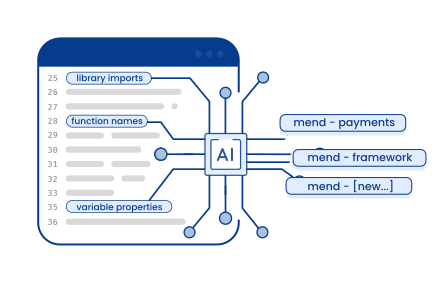
Automatically classify projects by business sensitivity
Not all vulnerabilities carry the same business risk — even when the CVSS score says otherwise.
Mend.io automatically analyzes your codebase to label projects handling payments, healthcare data, or PII, so security teams can apply stricter policies and faster SLAs where it actually matters. No manual tagging. No assumptions. The context comes from what your code actually does.
Prioritize what’s exploitable, not just what’s severe
Severity scores alone don’t tell you what to fix first.
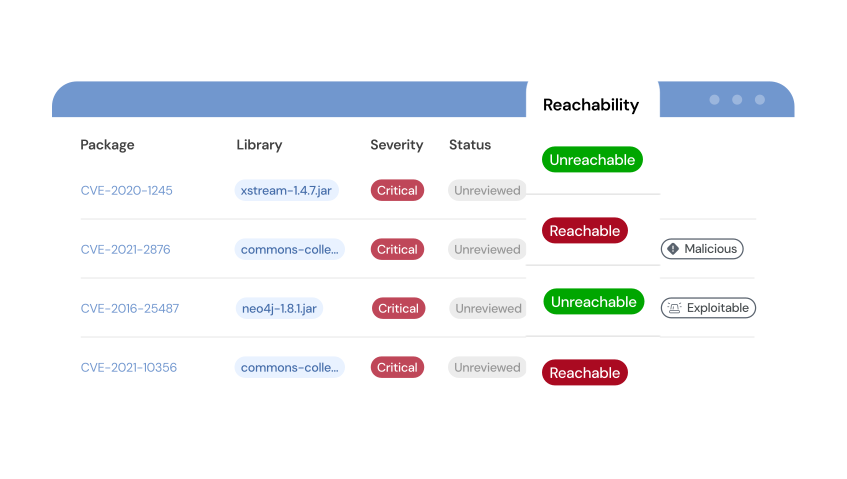
Mend.io combines CVSS with EPSS — the exploit prediction scoring system — to surface vulnerabilities that are both severe and actively being exploited in the wild. The result: a prioritized queue your team can defend, not just a ranked list of scores.
Predict runtime exposure in containers, without an agent
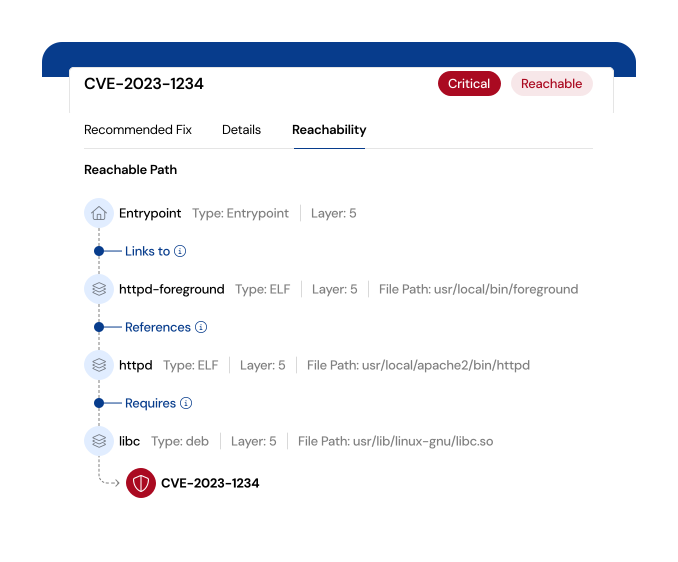
A vulnerability in a dormant package is not the same risk as one actively running in production.
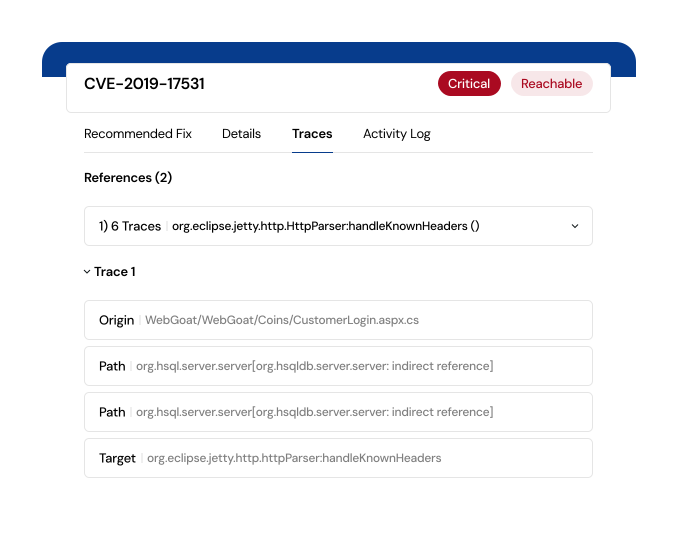
Mend.io statically analyzes images to accurately predict which packages are actively used at runtime and which sit dormant. Developers get findings scoped to what’s actually reachable, with the context to act immediately rather than investigate first.
“One of our most indicative KPIs is the amount of time for us to remediate vulnerabilities and also the amount of time developers spend fixing vulnerabilities in our code base, which has reduced significantly. We’re talking about at least 80% reduction in time.”


“When the product you sell is an application you develop, your teams need to be fast, secure and compliant. These three factors often work in opposite directions. Mend provides the opportunity to align these often competing factors, providing Vonage with an advantage in a very competitive marketplace.”


“The biggest value we get out of Mend is the fast feedback loop, which enables our developers to respond rapidly to any vulnerability or license issues. When a vulnerability or a license is disregarded or blocked, and there is a policy violation, they get the feedback directly.”


Prioritization that reflects your business, not just your scan results
Mend.io combines business context, exploitability signals, and runtime reachability to significantly reduce the time and effort required to prioritize and remediate vulnerabilities — improving your overall risk posture.

Business-aware prioritization
Mend.io gives AppSec teams the data to say exactly why a vulnerability is critical right now — not just that it has a high CVSS. Contextual evidence makes escalation decisions defensible and remediation timelines accurate.
Accelerate remediation
By addressing the most critical vulnerabilities first — starting with those in projects handling payments, healthcare data, or PII — development teams improve remediation efficiency and reduce overall risk exposure.
Gain exploitability context
Development teams obtain insights into the exploitability of vulnerabilities through CVSS, EPSS scoring, and reachability analysis, so they can proactively prioritize remediation efforts and develop effective mitigation strategies.
Open source licensing in 2026 is complex
Most teams don’t know where their exposure lives until it’s a legal problem. This guide shows you exactly where to look.


Stop managing alerts.
Start reducing risk.
Join the teams reducing remediation effort by 75%.