Table of contents
Related resources


AI Application Security: 6 Focus Areas and Critical Best Practices

What is AI application security?
AI application security protects AI-powered apps, including those powered by large language models ( LLMs), from unique threats like prompt injection, data poisoning, and model theft. It achieves this by securing the entire lifecycle, including code, data, algorithms, and APIs, using specialized tools and processes that go beyond traditional security measures. It involves securing the AI model’s behavior, training data, and outputs.
Key focus areas:
- Prompt injection: Tricking models with malicious prompts to bypass safeguards or reveal sensitive info.
- Data poisoning: Corrupting training data to skew model behavior or introduce backdoors.
- Model theft/extraction: Stealing proprietary AI models or their underlying logic.
- Insecure output handling: Unsafe processing of AI-generated content, leading to further vulnerabilities.
- Agentic AI security: Techniques include restricting action scopes, validating intermediate decisions, sandboxing executions, and enforcing strict context boundaries
- Data privacy: Protecting sensitive data used for training and inference.
How it differs from traditional AppSec:
- Broader scope: Protects not just code, but also models, data, and autonomous decision-making processes.
- Non-deterministic application behavior: Models can produce different outputs for the same input, requiring behavioral testing.
- New attack surfaces: AI introduces new vulnerabilities in weights, model architectures, training data, and agentic frameworks.
This is part of a series of articles about AI security.
How AI application security differs from traditional AppSec
Broader scope
AI application security encompasses a broader range of assets and attack vectors than traditional application security. Traditional AppSec primarily focuses on protecting code, endpoints, user input, and authentication mechanisms. In contrast, AI AppSec extends its scope to include model architectures, training data, inference pipelines, and even the platforms hosting the AI models. This expanded footprint requires new types of security assessments and controls to address the risks unique to each AI component.
The supply chain for AI models and data sources is often more complex than that for conventional applications. Models can be sourced from third parties, updated frequently, and retrained using new data, creating additional entry points for vulnerabilities. This requires a holistic security approach that includes validation, monitoring, and provenance checks for both code and data throughout the lifecycle of the AI system.
Non-deterministic application behavior
Unlike traditional applications built to return consistent, predictable outputs for the same input, AI applications are typically non-deterministic. Different runs may yield different results due to stochastic processes within neural networks or varying data contexts. This non-deterministic nature complicates security efforts, making it harder to reproduce issues and test for vulnerabilities. Attackers can exploit this unpredictability, finding ways to manipulate models into producing undesirable or unsafe outputs.
Testing for security in non-deterministic environments requires more methods, such as adversarial testing and statistical analysis, rather than relying solely on standard unit or integration tests. Security teams must adapt methodologies to probe the model’s boundaries and observe its behavior under a range of scenarios that include edge cases and potential attack patterns.
New attack surfaces
AI applications introduce new and distinct attack surfaces that do not exist in traditional software systems. For example, the model’s inputs and outputs, the data pipelines feeding into the training process, and the APIs for model inference all serve as potential vectors for attack. Prompt injection, model inversion, adversarial example crafting, and data poisoning are examples of new threat classes that target the unique mechanisms underpinning AI.
As attackers learn to exploit the ways models process and interpret information, traditional security practices, such as input sanitization and perimeter defense, are often insufficient on their own. Defenders must supplement these with AI-aware techniques tailored to monitor, test, and validate both the data and the outputs associated with machine learning components.
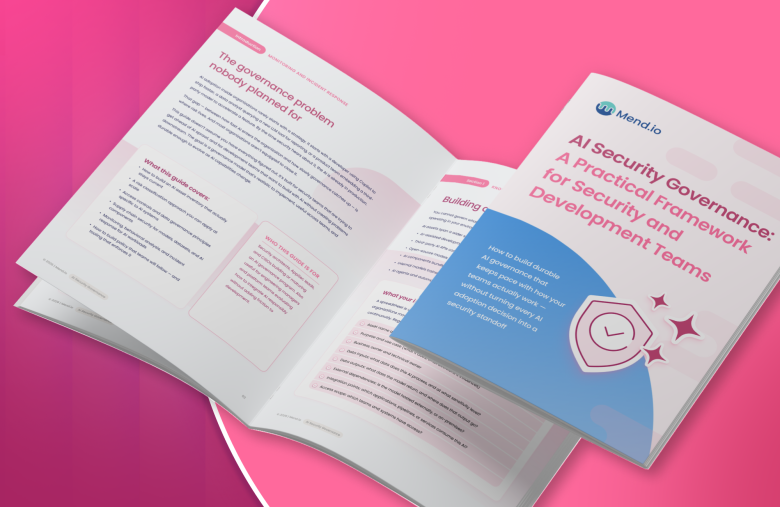
You can’t govern AI you can’t see
Build a governed AI inventory, classify risk by data sensitivity and decision authority, and score your maturity without slowing your teams down.
Key focus areas of AI application security
1. Prompt injection
Prompt injection targets natural language or generative models by manipulating their input prompts to cause undesired or malicious behavior. Attackers craft inputs that subvert the intended logic or elicit confidential information and harmful actions. This issue is especially critical for publicly accessible AI models, such as chatbots and digital assistants, which may interpret plain text dangerously if not properly safeguarded.
Mitigating prompt injection risks requires robust input validation, continual prompt engineering, and output filtering. Defense also requires keeping model updates in step with evolving attack methods and monitoring model performance to identify abnormal or suspicious output patterns consistently.
2. Data poisoning
Data poisoning is a critical threat where attackers tamper with training data, causing the AI model to learn incorrect or malicious behaviors. By inserting crafted, malicious data into the training dataset, adversaries can manipulate model decision-making, leading to misclassifications or intentional weaknesses.
Protecting against data poisoning involves rigorous vetting of data sources, monitoring for outliers or unexpected patterns, and employing statistical and cryptographic techniques to ensure data provenance and integrity. Regular reviews and audits of training datasets are essential, especially when models are retrained on continuously updated or externally sourced data.
3. Model theft/extraction
Model theft or extraction refers to attacks where adversaries replicate, steal, or reverse-engineer a deployed model by systematically querying it and analyzing the outputs. This threat is significant when proprietary models provide a competitive edge or incorporate sensitive business logic.
To counter model theft, security teams can implement query monitoring, rate limiting, and watermarking strategies. Obfuscating model internals, applying differential privacy, or deploying honeypots can further deter extraction attempts and help trace or frustrate attackers attempting to clone proprietary models.
4. Insecure output handling
Insecure output handling occurs when the outputs from AI models—including recommendations, generated text, or classified results—are used by downstream systems or exposed to users without proper validation or control. Mishandled outputs might lead to harmful automation, data leaks, or enable escalation of privileges if interpreted unchecked by other software.
Securing output channels means implementing policies to validate, sanitize, and monitor anything an AI model generates before use or display. Output should be treated with the same caution as untrusted input, enforcing controls to guard against injection attacks, privacy breaches, or machine-driven abuse based on incorrect or maliciously influenced model responses.
5. Agentic AI security
Agentic AI systems, such as autonomous agents or LLM-based decision-making workflows, introduce new risks because they can initiate actions based on their internal reasoning and environment interpretation. These agents may perform tasks like web browsing, API calls, or multi-step planning without direct human oversight. As a result, they increase the system’s operational complexity and attack surface, making it possible for adversaries to exploit their autonomy to bypass safeguards or execute unintended actions.
Securing agentic AI requires controlling both the agent’s capabilities and the execution environment. Techniques include restricting action scopes, validating intermediate decisions, sandboxing executions, and enforcing strict context boundaries. Continuous monitoring and real-time overrides must be in place to ensure that agents operate within safe and predictable limits, especially when interacting with external systems or executing high-risk tasks.
6. Data privacy
AI applications process vast quantities of data, often including sensitive personal or proprietary information. Protecting user privacy is paramount as AI models may inadvertently memorize, expose, or infer confidential data from their training sets or as part of their outputs. Privacy risks amplify when handling regulated or high-value datasets.
To mitigate privacy concerns, organizations must enforce purpose limitation, employ anonymization and differential privacy, and restrict access to training and inference data. Regular audits, encryption, and compliance with standards such as GDPR are critical for maintaining trust and legal conformity when building and deploying AI-based applications.
Best practices for utilizing AI to secure applications
1. Implement robust data governance and supply chain validation
Strong data governance is the backbone of AI application security, ensuring responsible management of data assets throughout their lifecycle. This involves classifying data according to sensitivity, setting access controls, and enforcing validation at every stage—collection, storage, processing, and disposal. Supply-chain validation further ensures that models and datasets acquired from external parties are verified.
Establishing clear policies on data provenance and integrity helps defend against data poisoning and unauthorized access. Regular audits, comprehensive logging, and incident reporting procedures strengthen accountability and provide evidence trails in case of security breaches or investigations.
2. Automate dependency and open source risk management
Managing risks from dependencies and open-source software is crucial, as AI systems often incorporate numerous third-party packages and models. Automating the identification, tracking, and patching of vulnerabilities in these dependencies prevents known flaws from being exploited. Automated tools can scan software bills of materials and flag outdated or risky components, streamlining updates.
Comprehensive dependency risk management reduces the likelihood of supply-chain attacks, where adversaries exploit trust relationships among software components. Automation also ensures that vulnerabilities are rapidly addressed before they propagate across environments and critical systems.
Learn more in our detailed guide to AI risk management.
3. Enforce secure-by-default automation
Building and deploying AI applications under secure-by-default principles ensures that systems start from a posture of least privilege and restrictiveness. Automated configurations must apply hardened security defaults, validate settings, and enforce strong authentication and encryption practices from initialization onward. By codifying these principles in infrastructure-as-code or CI/CD pipelines, organizations reduce the attack surface and prevent risky deviations.
Continuous automation of secure practices is necessary to keep pace with AI’s iterative development cycles, where frequent updates and new models may be integrated rapidly. This minimizes human error, ensures consistency, and establishes measurable baselines for system integrity.
4. Maintain human oversight and validation
Despite the promise of AI-driven automation, retaining skilled human oversight remains crucial. Security teams need to interpret analysis results, correlate signals, and make judgment calls that automated systems might not be equipped to handle. Human-in-the-loop processes also enable organizations to respond rapidly to new threats and evolving adversarial tactics.
Effective AI application security blends the speed and scalability of automation with the contextual understanding and adaptive reasoning of experienced professionals. Regular reviews, ethical red-teaming sessions, and manual tests are vital to ensure that automated defenses remain effective and appropriate in dynamic, real-world contexts.
Evaluating tools and vendors for AI application security
Before selecting tools or vendors to secure AI applications, it's essential to align evaluation criteria with the unique risks and operational needs of AI systems. Traditional AppSec solutions often lack capabilities for addressing model-specific threats, making specialized AI security tooling a necessity.
When evaluating vendors and tools, consider the following:
- Support for AI-specific threats: Tools should detect and mitigate threats unique to AI, such as adversarial inputs, prompt injection, data poisoning, and model extraction. Look for solutions that provide model introspection, behavior monitoring, and input/output validation tailored to machine learning workflows.
- Coverage across the AI lifecycle: Effective solutions must address risks at all stages of the AI lifecycle, including data collection, model training, deployment, and inference. Tools should support securing training pipelines, validating data provenance, and monitoring models in production.
- Integration with existing DevSecOps pipelines: Choose tools that integrate easily into CI/CD and MLOps environments. Compatibility with infrastructure-as-code, version control systems, and automated deployment workflows ensures security can scale with AI development processes.
- Transparency and explainability: Vendors should offer tools that provide explainable outputs, allowing security teams to understand how and why a model behaved in a certain way. This is key for investigating incidents, building trust, and complying with regulatory requirements.
- Governance and compliance features: Look for features that help enforce privacy laws and security standards, such as GDPR, HIPAA, or ISO 27001. Capabilities like audit logging, access control, and automated documentation are essential for maintaining compliance.
- Customizability and extensibility: Security tools must adapt to different AI frameworks (like TensorFlow, PyTorch, or scikit-learn) and deployment architectures (cloud, edge, hybrid). Tools that offer APIs or plugin support provide flexibility for bespoke AI workflows.
- Performance and scalability: Ensure the tools can operate efficiently without introducing significant latency, especially in inference-time protection scenarios. Scalability to handle large volumes of data and requests is critical for production use.
- Clear SLAs and support: Prioritize vendors that provide strong support agreements, regular updates, and clear response timelines for critical security incidents. Proactive engagement and training offerings are also valuable for long-term effectiveness.
AI application security with Mend.io
Mend AI provides a comprehensive security and governance framework for AI-powered applications, enabling organizations to embrace generative AI while mitigating risks unique to Large Language Models (LLMs) and AI components. It integrates directly into developer workflows to identify "Shadow AI," harden system prompts, and defend against adversarial attacks.
Key features include:
AI runtime protection delivers in-app guardrails and real-time safety filters that defend against unpredictable behavioral threats and govern live AI interactions.
AI supply chain management that maintains a real-time inventory of all models and frameworks—including hard-to-detect “Shadow AI”—to mitigate risks from licensing, vulnerabilities, and malicious packages across the AI lifecycle.
System prompt hardening that proactively identifies risks based on content and structure, allowing teams to assess and control problematic code or insecure descriptions within AI prompts as part of a broader security testing strategy.
AI red teaming that utilizes prebuilt, customizable security testing to verify applications against threats like prompt injection, context leakage, data exfiltration, and hallucinations before they lead to unintended consequences.
AI agent configuration scanning treats "Agents as Code," to provide security visibility and CI-friendly enforcement to AI configurations before they reach production.
Proactive policies and governance that leverages a robust policy engine to ensure all AI components and AI-SPM (AI posture management) protocols adhere to organizational standards and automated workflows throughout the SDLC.