Table of contents
Related resources


Best AI Red Teaming Tools: Top 7 Platforms and Services in 2026

AI red teaming services help organizations uncover weaknesses in AI systems before attackers can exploit them. In this guide, we compare seven notable platforms and professional services for 2026, including their approaches, capabilities, and ideal use cases.
Drawing on Mend.io’s experience in application and AI security, we’ll also explain where red teaming fits alongside AI penetration testing and what to look for when evaluating a provider.
What are AI red teaming services?
AI red teaming services involve security assessments focused on artificial intelligence systems. Unlike traditional red teaming, which targets general IT infrastructure, AI red teaming targets the unique attack surfaces and risks associated with AI, large language models (LLMs), and machine learning deployments and LLM applications.
These services simulate adversarial attacks, probing for vulnerabilities like prompt injection, data leakage, bias, and malicious manipulation. The goal is to expose flaws in AI system behavior, uncover weaknesses in controls, and help organizations strengthen their AI defenses.
Typical AI red teaming engagements use a combination of an AI red teaming agent, automated testing capabilities, and expert testers who craft scenarios based on real-world adversary tactics. This may include attempting to trick AI models into producing harmful outputs, exfiltrating sensitive prompts or data, or subverting the intended operation of autonomous agents. By mimicking the approaches that malicious actors might take, red teamers help organizations uncover weak spots before they can be exploited.
For teams building a broader security program, it’s helpful to understand how these efforts complement AI penetration testing , which focuses on testing specific vulnerabilities rather than full adversarial simulations.
Editor’s note: We updated this article to cover recent trends in the AI red teaming market and to refresh information on AI red teaming services, reflecting service features and capabilities in 2026.
Evolution of the AI red teaming market
Organizations are adopting AI at an unprecedented pace. McKinsey estimates generative AI could add up to $4.4 trillion annually to the global economy, increasing AI’s overall business impact by as much as 40%.
Adoption is happening faster than security practices can keep up. Rapid experimentation and deployment cycles often outpace governance and risk management processes. Security teams also report that AI complicates traditional defenses. AI makes data security more difficult because conventional controls are not designed to handle dynamic model behavior.
Many AI systems remain vulnerable to adversarial manipulation. Prompt injection is the most common vulnerability in large language models. Role-play jailbreak attacks succeed nearly 90% of the time, and multi-turn jailbreak attacks can reach a 97% success rate within five conversational turns. These attacks exploit how models interpret context and instructions over time.
Other common exploit techniques include:
- Code injection
- Content exhaustion attacks
- Hypothetical or controversial framing
- Role-playing scenarios designed to bypass safeguards
Demand for adversarial testing is growing rapidly as AI becomes embedded in business operations. Much of this demand is driven by the need for ongoing, repeatable testing rather than one-off checks, which is why many teams turn to automated red teaming. The AI red team agents market is projected to reach $7.9 billion by 2033, while broader red teaming services are expected to become a $5.5 billion global industry with a 14% compound annual growth rate
AI red teaming services vs. AI penetration testing services
AI penetration testing typically focuses on finding specific, well-defined vulnerabilities in an AI system, such as insecure APIs, model misconfigurations, or exposed sensitive endpoints. It tends to be checklist-driven, aiming to validate security best practices and compliance standards, with a narrower, technical angle. The tests are usually structured and focus on surface-level weaknesses, similar to traditional pen-testing, but adjusted for AI technologies.
AI red teaming adopts a broader perspective, simulating threat actor behavior across the entire AI system lifecycle. This includes social engineering, exploiting model drift, prompt engineering, and multi-stage attacks that cross subsystem boundaries.
Red teaming is adversarial by nature and often involves creative, scenario-based exercises that go beyond basic vulnerability scanning. Teams can also use threat knowledge bases such as MITRE ATLAS to map adversarial tactics and techniques relevant to AI systems and develop more representative attack scenarios.
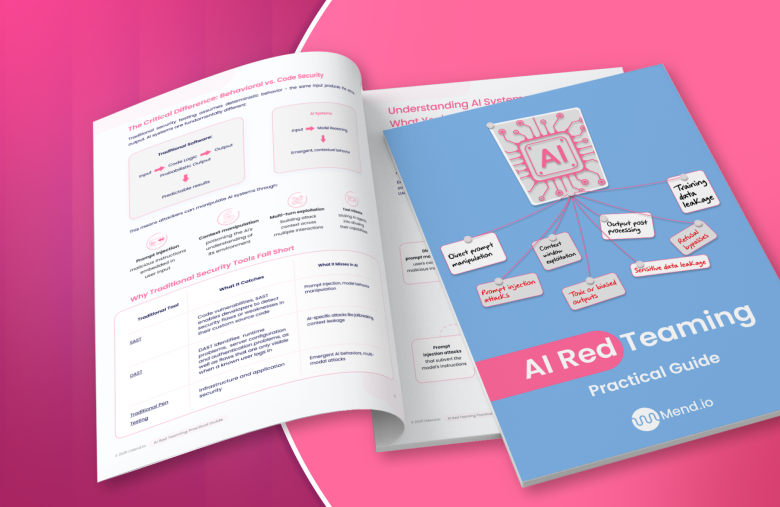
Stop vibe-testing your AI
Prompt injection, jailbreaking, PII leakage. Get the test cases, the process, and a one-page checklist to run them in CI.
Key use cases for AI red teaming services
Prompt injection testing
Prompt injection occurs when attackers manipulate the inputs or prompts fed to an LLM, a core concern in LLM red teaming, tricking it into generating unintended or harmful outputs. Prompt injection testing checks the AI's ability to withstand unauthorized manipulations, helping organizations identify instances where the model can be made to bypass restrictions, leak sensitive information, or perform unapproved actions. Red teamers craft adversarial prompts to simulate realistic attack scenarios, ensuring that defenses against such manipulations are effective and that user inputs are properly sanitized.
Through repeated adversarial prompt testing, organizations can pinpoint specific weaknesses in prompt design, response filtering, and input validation. This process highlights areas where business logic or security policies might be insufficient. Prompt injection testing helps prevent situations where AI-powered features can be abused in production, safeguarding both users and the enterprise from unexpected risks.
Data leakage detection
Data leakage detection in AI systems is focused on identifying and preventing the unauthorized exposure of sensitive or proprietary data through model outputs. Red teamers simulate attacks where attackers try to extract memorized or hidden information from responses, especially when models have been exposed to private datasets during training or fine-tuning. By crafting targeted queries and analyzing outputs, they assess the risk of real leaks and measure how easily an attacker could extract confidential information.
This kind of testing is essential because AI systems, especially those based on large-scale language models, can unintentionally memorize and regurgitate snippets of their training data. By exposing these issues in a controlled environment, organizations can apply appropriate mitigation strategies, such as improved prompt filtering, stronger dataset curation practices, or limiting model context to minimize leakage risks. Data leakage detection is critical for regulatory compliance and for protecting intellectual property and privacy interests.
Bias and fairness evaluation
Bias and fairness evaluations are a critical part of AI red teaming, given the increasing regulatory and ethical scrutiny AI deployments face. Red teamers intentionally design test cases to expose systematic biases in AI models, such as discriminatory patterns based on gender, race, location, or other protected attributes. By measuring disparities in outputs, these evaluations help organizations assess the fairness of their AI solutions and identify the root causes of any observed bias, whether embedded in training data or model architecture.
Bias and fairness testing is vital for ensuring that AI systems do not reinforce or amplify harmful societal biases. If left unchecked, these issues can result in reputational harm, legal challenges, and loss of public trust. AI red teaming for bias and fairness provides organizations with actionable insights, enabling improvements in data curation, algorithmic transparency, and output monitoring, thereby supporting compliance and more equitable AI adoption.
Security of AI agents
The security of AI agents, which are autonomous, decision-making entities powered by AI models, presents unique challenges not encountered in more static AI deployments. Attackers may seek to manipulate agents through adversarial prompts, exploit weaknesses in agent decision logic, or subvert multi-agent communication channels.
Red teamers focus on identifying weaknesses that could allow unauthorized actions, privilege escalation, or unintended information disclosure, especially in settings where agents are integrated with external tools or perform high-stakes operations.
By testing the full range of interactions agents may have—with users, other agents, APIs, or critical infrastructure—red teamers provide a comprehensive view of system resilience. They also assess whether agents can be coerced into unsafe behaviors, such as ignoring business constraints or leaking operational details.
Model robustness assessment
Model robustness assessments are aimed at understanding how resistant an AI model is to adversarial attacks, distributional shifts, or unexpected inputs. Red teamers use adversarial example generation, fuzzing, and other stress tests to probe models for vulnerabilities that could degrade their performance or make them produce unsafe outputs under pressure. This goes beyond runtime checks, evaluating not only the model’s surface accuracy but its ability to perform correctly in the face of real-world uncertainty and deliberate adversarial interference.
A key part of robustness assessment involves testing how well a model generalizes to scenarios it was not explicitly trained to handle, identifying risks of overfitting or brittleness. By simulating abnormal data, distribution shifts, or adversarial noise, organizations gain insight into worst-case behaviors, which is critical for safety-critical applications like healthcare, finance, or autonomous vehicles.
Notable AI red teaming tools
A red teaming tool can help organizations automate repeatable adversarial tests, expand attack coverage, and evaluate model behavior throughout development. The market includes commercial platforms, open source options, and specialized AI evaluation offerings; other names readers may encounter include Confident AI and Lakera Red.
1. Mend.io

Mend AI's red teaming solution focuses on identifying and mitigating behavioral risks within AI systems, often missed by traditional security approaches. It provides a specialized platform to simulate adversarial interactions, ensuring the robustness and security of AI-powered applications in real-world scenarios.
Key features include:
- Comprehensive threat scenarios: Leverages a robust library of adversarial attacks to provide in-depth security validation against evolving AI threats
- Automated AI red teaming: Continuously simulates adversarial conversations using prebuilt, customizable playbooks to uncover runtime vulnerabilities in AI systems
- Behavioral risk identification: Tests for a range of critical threats including prompt injection, context leakage, biases, data exfiltration, jailbreaks, and hallucinations
- Proactive prompt hardening: Scans system prompts for adherence to security best practices and recommends secure rewrites to prevent misuse and data leakage, complementing the red teaming efforts
- Continuous testing: Enables the ongoing assessment of AI systems throughout their lifecycle, identifying new vulnerabilities as models evolve
2. Mindgard

Mindgard is an AI security platform that focuses on attacker-aligned testing to uncover how threats can exploit deployed AI systems. It emphasizes visibility into AI environments by mapping the attack surface across models, agents, and infrastructure. The platform connects continuous red teaming with runtime defense, helping teams understand not just vulnerabilities, but how they can be exploited in practice.
Key features include:
- Attack surface mapping: Identifies AI assets, interactions, and exposure points across models, agents, and infrastructure
- Continuous adversarial testing: Simulates attacker behavior over time to uncover exploitable weaknesses
- Behavioral analysis: Evaluates how AI systems respond to adversarial inputs and misuse scenarios
- Runtime protection linkage: Connects testing insights with detection and enforcement controls in production
- Integrated lifecycle support: Works across development and production environments with CI/CD compatibility
Notable AI red teaming professional services
3. HackerOne

HackerOne provides AI red teaming through a human-led, crowdsourced model that leverages a global community of security researchers. Its approach focuses on uncovering high-impact vulnerabilities in AI systems by simulating real-world adversarial behavior across models, APIs, and integrations. Engagements are tailored to each organization’s risk profile and aligned with established security frameworks.
Key features include:
- Researcher-led testing: Uses vetted security experts to identify vulnerabilities that automated tools may miss
- Tailored threat modeling: Designs test plans based on specific AI use cases and risk priorities
- Framework-aligned assessments: Maps findings to standards such as OWASP LLM Top 10 and NIST AI RMF
- Centralized reporting: Gives the security team detailed findings and prioritized remediation through a unified platform
- Embedded advisory support: Includes guidance from security experts to validate fixes and improve defenses
4. Redbot Security

Redbot Security delivers red teaming through multi-phase simulation exercises to emulate persistent, real-world attackers. Its Red Team Security Exercise (RTSE) focuses on testing an organization’s ability to detect, respond to, and recover from attacks across cyber, physical, and social vectors. The approach emphasizes long-duration engagements that go beyond traditional short-term penetration tests.
Key features include:
- Multi-phase attack simulation: Covers reconnaissance, exploitation, persistence, and reporting in structured stages
- Realistic threat emulation: Replicates advanced attacker tactics across digital and physical environments
- Custom attack scenarios: Tailors engagements based on organizational assets and threat models
- Hybrid testing approach: Combines red teaming with penetration testing for scenario-based analysis
- Detailed reporting and collaboration: Provides step-by-step findings and works with internal teams to improve defenses
5. CrowdStrike

CrowdStrike offers AI red teaming services that simulate adversarial attacks against AI systems and integrations. Its approach focuses on testing how AI applications behave under realistic threat scenarios, including attempts to manipulate outputs, access sensitive data, or disrupt system integrity. Engagements are tailored to each environment and incorporate both offensive and defensive validation.
Key features include:
- Adversary emulation: Simulates real-world attack scenarios adapted to AI systems and use cases
- LLM-focused penetration testing: Assesses vulnerabilities using standards like OWASP Top 10 for AI applications
- Red team / blue team exercises: Tests detection and response capabilities alongside offensive simulations
- Integration risk analysis: Identifies weaknesses in AI system connections and dependencies
- Data protection testing: Evaluates risks related to sensitive data exposure and misuse
6. Schellman

Schellman provides red team assessments that simulate real-world attacks to evaluate how well organizations can detect and respond to threats. Its methodology follows structured stages such as reconnaissance, exploitation, lateral movement, and exfiltration, with an emphasis on testing both technical controls and human processes.
Key features include:
- Structured attack lifecycle: Follows defined stages from reconnaissance to post-exploitation and reporting
- Framework-based methodology: Uses standards like MITRE ATT&CK to guide testing and analysis
- Detection and response evaluation: Tests how effectively teams identify and react to simulated attacks
- Comprehensive coverage: Assesses infrastructure, processes, and personnel as part of the engagement
- Detailed attack documentation: Captures tactics, techniques, and indicators of compromise for remediation
7. Shaip

Shaip supports AI red teaming through human-led evaluation and testing of AI systems, particularly focused on data quality, model behavior, and output reliability. Its approach leverages domain experts to assess risks such as bias, hallucinations, and inappropriate outputs, complementing automated testing with contextual and domain-specific analysis.
Key features include:
- Human-in-the-loop evaluation: Uses domain experts to assess AI outputs and identify nuanced risks
- Bias and quality assessment: Evaluates fairness, correctness, and appropriateness of model responses
- Domain-specific testing: Tailors evaluations to industry use cases such as healthcare or finance
- Model validation support: Assesses outputs to improve reliability and alignment with intended use
- Compliance-aware processes: Supports regulatory requirements through structured data and evaluation practices
Key use cases for AI red teaming services
AI red teaming can address a wide range of risks across models, applications, and autonomous agents. The following use cases show where adversarial testing can help uncover weaknesses before they affect users or production systems.
Prompt injection testing
Prompt injection occurs when attackers manipulate the inputs or prompts fed to an LLM, a core concern in LLM red teaming , tricking it into generating unintended or harmful outputs. Prompt injection testing checks the AI's ability to withstand unauthorized manipulations, helping organizations identify instances where the model can be made to bypass restrictions, leak sensitive information, or perform unapproved actions. Red teamers craft adversarial prompts to simulate realistic attack scenarios, ensuring that defenses against such manipulations are effective and that user inputs are properly sanitized.
Through repeated adversarial prompt testing, organizations can pinpoint specific weaknesses in prompt design, response filtering, and input validation. This process highlights areas where business logic or security policies might be insufficient. Prompt injection testing helps prevent situations where AI-powered features can be abused in production, safeguarding both users and the enterprise from unexpected risks.
Data leakage detection
Data leakage detection in AI systems is focused on identifying and preventing the unauthorized exposure of sensitive or proprietary data through model outputs. Red teamers simulate attacks where attackers try to extract memorized or hidden information from responses, especially when models have been exposed to private datasets during training or fine-tuning. By crafting targeted queries and analyzing outputs, they assess the risk of real leaks and measure how easily an attacker could extract confidential information.
This kind of testing is essential because AI systems, especially those based on large-scale language models, can unintentionally memorize and regurgitate snippets of their training data. By exposing these issues in a controlled environment, organizations can apply appropriate mitigation strategies, such as improved prompt filtering, stronger dataset curation practices, or limiting model context to minimize leakage risks. Data leakage detection is critical for regulatory compliance and for protecting intellectual property and privacy interests.
Bias and fairness evaluation
Bias and fairness evaluations are a critical part of AI red teaming, given the increasing regulatory and ethical scrutiny AI deployments face. Red teamers intentionally design test cases to expose systematic biases in AI models, such as discriminatory patterns based on gender, race, location, or other protected attributes. By measuring disparities in outputs, these evaluations help organizations assess the fairness of their AI solutions and identify the root causes of any observed bias, whether embedded in training data or model architecture.
Bias and fairness testing is vital for ensuring that AI systems do not reinforce or amplify harmful societal biases. If left unchecked, these issues can result in reputational harm, legal challenges, and loss of public trust. AI red teaming for bias and fairness provides organizations with actionable insights, enabling improvements in data curation, algorithmic transparency, and output monitoring, thereby supporting compliance and more equitable AI adoption.
Security of AI agents
The security of AI agents, which are autonomous, decision-making entities powered by AI models, presents unique challenges not encountered in more static AI deployments. Attackers may seek to manipulate agents through adversarial prompts, exploit weaknesses in agent decision logic, or subvert multi-agent communication channels.
Red teamers focus on identifying weaknesses that could allow unauthorized actions, privilege escalation, or unintended information disclosure, especially in settings where agents are integrated with external tools or perform high-stakes operations.
By testing the full range of interactions agents may have, with users, other agents, APIs, or critical infrastructure, red teamers provide a comprehensive view of system resilience. They also assess whether agents can be coerced into unsafe behaviors, such as ignoring business constraints or leaking operational details.
Model robustness assessment
Model robustness assessments are aimed at understanding how resistant an AI model is to adversarial attacks, distributional shifts, or unexpected inputs. Red teamers use adversarial example generation, fuzzing, and other AI testing techniques to probe models for vulnerabilities that could degrade their performance or make them produce unsafe outputs under pressure. This goes beyond runtime checks, evaluating not only the model’s surface accuracy but its ability to perform correctly in the face of real-world uncertainty and deliberate adversarial interference.
A key part of robustness assessment involves testing how well a model generalizes to scenarios it was not explicitly trained to handle, identifying risks of overfitting or brittleness. By simulating abnormal data, distribution shifts, or adversarial noise, organizations gain insight into worst-case behaviors, which is critical for safety-critical applications like healthcare, finance, or autonomous vehicles.
Choosing the right AI red teaming service for your security needs
AI red teaming plays a pivotal role in securing the fast-evolving landscape of AI systems by exposing threats that traditional testing often overlooks. Its scenario-driven, adversarial approach enables organizations to assess risks beyond technical vulnerabilities, including ethical pitfalls, operational misalignments, and emergent behaviors in AI.
Explore Mend.io’s AI red teaming capabilities
Frequently asked questions about AI red teaming tools
What is the main difference between AI red teaming and AI penetration testing?
AI penetration testing checks specific technical vulnerabilities like misconfigured APIs against a structured checklist, whereas AI red teaming simulates real-world threat actors to probe full-lifecycle risks like prompt injection, multi-turn jailbreaks, model drift, and ethical bias.
What are the most critical risks evaluated during an AI red team assessment?
Assessments target vulnerabilities unique to machine learning deployments, including prompt injection and jailbreaking, sensitive data leakage, subversion of autonomous AI agent logic, and systematic model bias or performance degradation under unexpected inputs.
How often should an enterprise perform AI red teaming exercises?
Enterprise AI security requires continuous testing embedded directly into CI/CD pipelines rather than static annual audits. Automated red team agents should run continuous assessments to catch risks from ongoing model updates, complemented by periodic human-led stress tests.
Can automated testing tools completely replace human red teamers?
No. While automated tools excel at continuous scanning and playbook execution for known attack patterns, human experts remain essential for discovering novel attack paths, evaluating complex contextual logic, and handling high-stakes industry compliance.
Why are multi-turn jailbreak attacks more dangerous than standard single-prompt attacks?
Multi-turn jailbreaks exploit how models process context over extended conversations. By gradually shifting the persona or framing across multiple turns, attackers can bypass safety guardrails that would normally block a direct, single-prompt attempt.
Related posts
Why AI Red Teaming Is the Next Must-Have in Enterprise Security
LLM Red Teaming: Threats, Testing Process & Best Practices
What Is AI Penetration Testing and 5 Techniques