Table of contents
Related resources


Sonatype Lifecycle: 5 capabilities, deployment options, and limitations

What is Sonatype Lifecycle?
Sonatype Lifecycle is a software composition analysis (SCA) platform that automates open source governance and secures software supply chains across the software development lifecycle (SDLC). It identifies vulnerabilities, licensing risks, and architectural issues in open source components.
The platform integrates with developer tools and source control systems so developers can find, assess, and fix vulnerable or non-compliant components inside their existing workflows. It automates risk management and remediation, which reduces technical debt and shortens fix times. Teams ship faster as a result.
This is part of a series of articles about software composition analysis.
Key features of Sonatype Lifecycle
1. Software composition analysis (SCA)
Sonatype Lifecycle analyzes open source components used in applications and identifies security, license, and architectural risks. Your team sees which dependencies are safe to use, which need attention, and which to replace before they cause security or compliance problems.
Its SCA draws on vulnerability intelligence that goes beyond standard public databases. Many open source CVEs don’t have clear severity scores in public sources. Sonatype Lifecycle adds context so teams can judge the risk of each issue.
The tool supports more than 20 languages and package ecosystems, including Maven, npm, PyPI, NuGet, Go Modules, Docker, Gradle, RubyGems, Cargo, Conda, and others. Teams can apply the same open source risk controls across different application stacks.
Related content: Compare your options in our roundup of the best software composition analysis tools.
2. Automated remediation
Sonatype Lifecycle helps developers fix dependency issues through automated and assisted remediation. It reports each vulnerability with guidance on how to resolve it. It also supports automated fixes through features such as Golden Pull Requests.
These remediation workflows reduce the risk of breaking changes. The goal is to move teams from a vulnerable component to a safer version without disrupting the application. Developers spend less time investigating and deciding which upgrade path to take.
The platform also supports automated waivers and exemption management. When a risk is accepted, delayed, or not immediately fixable, the decision stays tracked and governed.
3. Deep intelligence
Sonatype Lifecycle uses detailed component intelligence to detect risks that tools relying only on public vulnerability feeds may miss. It defines vulnerability severity, identifies risky components, and reduces false positives and false negatives.
Developers can access this intelligence directly in their tools, including IDEs, source control systems, and pull request workflows. Risk information shows up earlier in development, before anyone merges a vulnerable or non-compliant component into the codebase.
The same context improves component selection. Developers can compare dependency options and choose versions with fewer risks and lower technical debt before the software reaches later testing or release stages.
4. Continuous monitoring
Sonatype Lifecycle provides ongoing visibility into open source risk across applications. Scanning doesn’t stop at a single point in time. It keeps monitoring components as new vulnerabilities, policy violations, or compliance risks appear.
Dashboards and reporting features give security and development teams a view of risk across projects and applications. You can prioritize remediation work and see where vulnerable or non-compliant components exist.
The platform also integrates with tools such as GitHub, GitLab, and Azure DevOps. Developers can view policy violations, vulnerability findings, and compliance issues inside their workflows, including pull requests, vulnerability reports, dependency lists, and build pipelines.
5. License compliance management
Sonatype Lifecycle identifies components that may violate internal policies, so teams can manage open source license obligations. You can define rules for acceptable and unacceptable licenses, then apply those rules across applications and development workflows.
The policy engine can flag non-compliant components early, including during pull requests or builds. Teams address license issues before release. That cuts rework and avoids late-stage compliance delays.
The platform also includes waiver and exemption management. Teams can document approved exceptions, manage policy decisions, and maintain governance when a component can’t be replaced immediately.
Related content: Know what to ask before you buy with our 7 questions to evaluate a software composition analysis solution.
Sonatype Lifecycle: 3 deployment options
Sonatype Lifecycle supports three deployment models, so you can choose the one that fits your infrastructure, security, and operational requirements. It can be deployed as a fully managed SaaS service, a self-hosted installation, or a dedicated cloud-managed environment.
1. Lifecycle SaaS
Lifecycle SaaS is Sonatype’s multi-tenant cloud offering. Sonatype hosts and maintains the platform, so you don’t need to install, manage, or upgrade the software yourself.
The service receives new features, improvements, and vulnerability intelligence updates. Teams get new capabilities and vulnerability data without manual upgrades or maintenance.
2. Lifecycle Self-Hosted
Lifecycle Self-Hosted is for organizations that want control over their environment, infrastructure, and assets. You deploy the platform within your own infrastructure. Your team manages configuration, security, and operational policies internally.
This deployment model also gives you control over when upgrades happen. Teams can schedule updates based on compatibility with their other tools and adopt new releases on their own timeline.
3. Lifecycle Cloud
Lifecycle Cloud provides a dedicated deployment managed by Sonatype. Unlike the multi-tenant SaaS offering, each customer receives a separate instance hosted in an Amazon Web Services (AWS) environment.
This option combines a dedicated deployment with managed operations. It suits teams that want a cloud-first approach without maintaining the infrastructure.
Key limitations of Sonatype Lifecycle
Sonatype Lifecycle provides open source risk management capabilities, but teams may face operational, integration, and usability challenges depending on their environment and scale. Users on G2 reported the following limitations.
- False positives: The platform can report false positive findings.
- Upgrade complexity: Older versions may have fewer capabilities and less support than newer releases. Upgrading can take time, especially when the tool is connected to several development and security workflows.
- Limited admin flexibility: Some environments may face restrictions around administrative access, such as difficulty supporting more than one admin user.
- Limited support for some languages: Sonatype Lifecycle may not work as well for components developed in C, C++, and mobile development languages compared to supported package ecosystems.
- High resource usage: The platform can consume a lot of system resources, especially when scanning or managing a large number of artifacts.
- Maintenance overhead: Self-hosted deployments may require ongoing maintenance, updates, and infrastructure management.
- Source code integration gaps: Integration with repositories and DevOps pipelines may need improvement, especially when APIs do not connect cleanly with existing development workflows.
- Limited library history tracking: The platform may lack detailed options for adding comments or viewing library history in a version-control-style format.
- Setup and learning curve: Initial setup can be complex, and teams may need time to understand the available configuration options.
- Licensing and pricing fit: Pricing plans may not always match every organization’s needs, especially when requirements do not fit standard packages.
How to manage open source risk across the SDLC with Mend SCA
Mend SCA helps your development and security teams find, prioritize, and fix risk in open source and third-party components without slowing delivery. It runs where developers already work. Integrations and automation enforce policy and remediate issues from the first commit through build, deployment, and maintenance.
Key capabilities of Mend SCA:
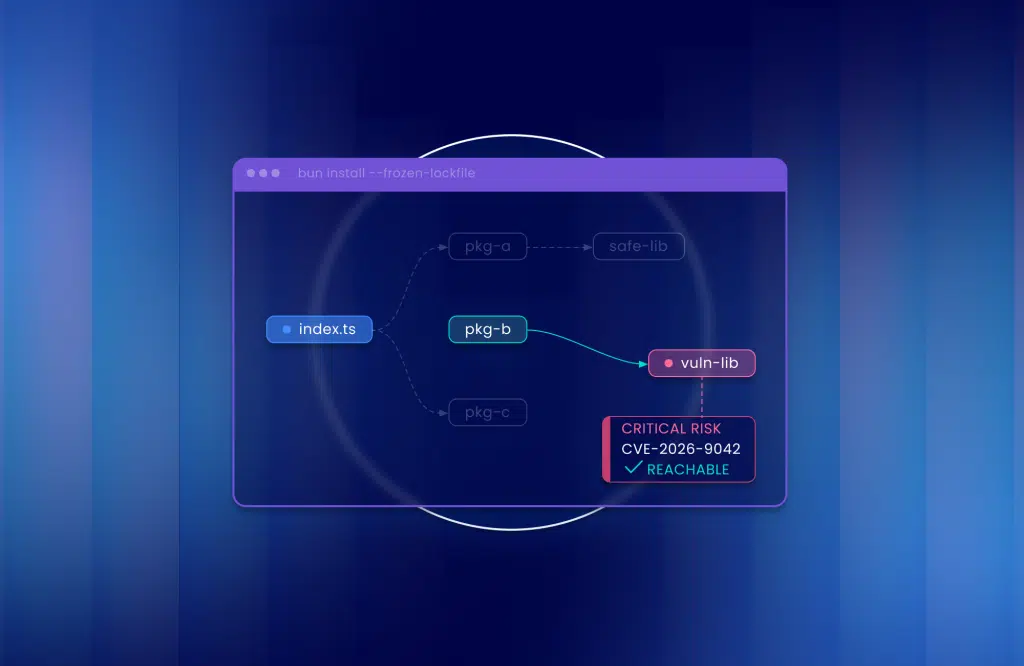
- Reachability-based prioritization: Mend SCA applies reachability analysis to determine whether your code calls a vulnerable function in both direct and transitive dependencies, so your team focuses on vulnerabilities that pose a real threat.
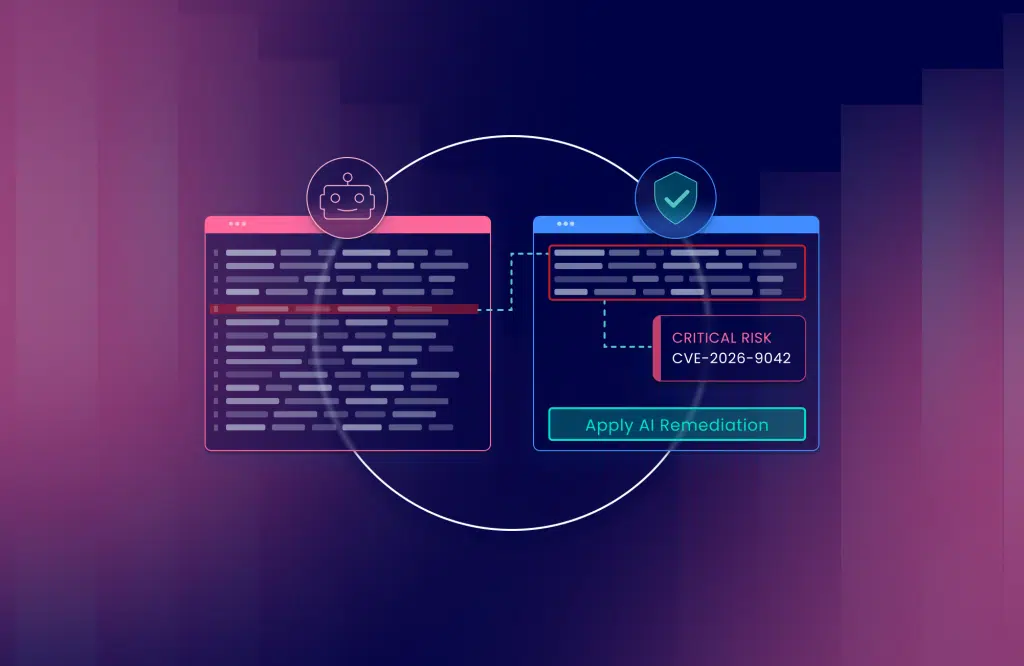
- Automated remediation: Mend SCA automatically finds and fixes open source vulnerabilities before code reaches the repo. It also feeds vulnerability information into AI code assistants, so developers remediate inside their workflow.
- Risk analysis: Mend SCA uses CVSS 4.0 severity ratings to gauge potential impact and incorporates EPSS exploitability data to assess how likely each vulnerability is to be exploited.
- SBOM generation and management: It produces a precise inventory of open source components, exports SBOMs in standardized formats such as SPDX and CycloneDX, and imports third-party SBOMs and uses VEX data to meet government and customer requirements.
- Developer-native integration and policy enforcement: Mend SCA integrates with IDEs, repositories, registries, and CI/CD pipelines. It remediates risk and enforces policy as you code, build, and deploy.
Most SCA evaluations compare detection coverage and skip the harder question: how many findings can your developers safely ignore? A long list of unreachable vulnerabilities creates the same backlog under any deployment model.