Table of contents
The four places AI runs in Mend SAST

Four jobs, two years in production, and measured results. Here is what each one does for the developer on the other end.
Mend SAST has been running frontier models in production since 2024. Not in a lab, not in a pilot, in the scans our customers run every day.
There are four places a model does work in the product, and each one takes work off a person. Here is what they are and what you actually get out of them.
“The models are not there to be impressive. Each one sits where a person was already making a judgment call, doing it at the speed of the queue instead of the speed of a calendar.”
Asaf Saar, EVP of Product, Mend.io
1. Remediation: the fix arrives written
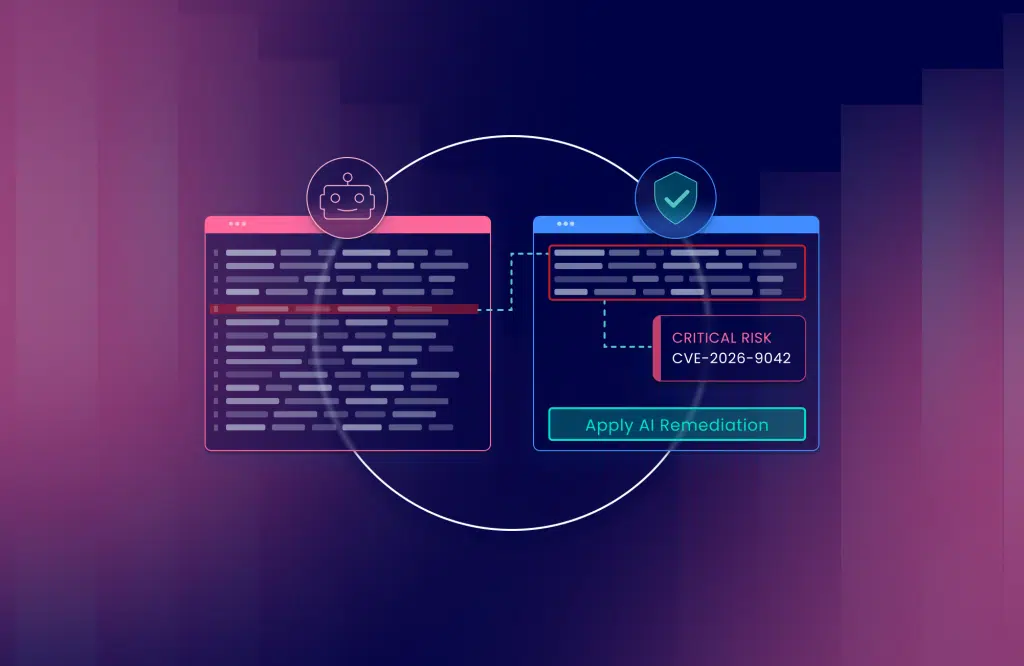
When Mend SAST finds something in a supported language, a model writes the suggested fix and drops it into the repository workflow. You are not reading a finding in one place and then going somewhere else to work out how to fix it.
Third-party testing put those fixes 46% more accurate than the competitor average, and we published that benchmark back in 2025.
2. Agentic triage: the false positives get caught first
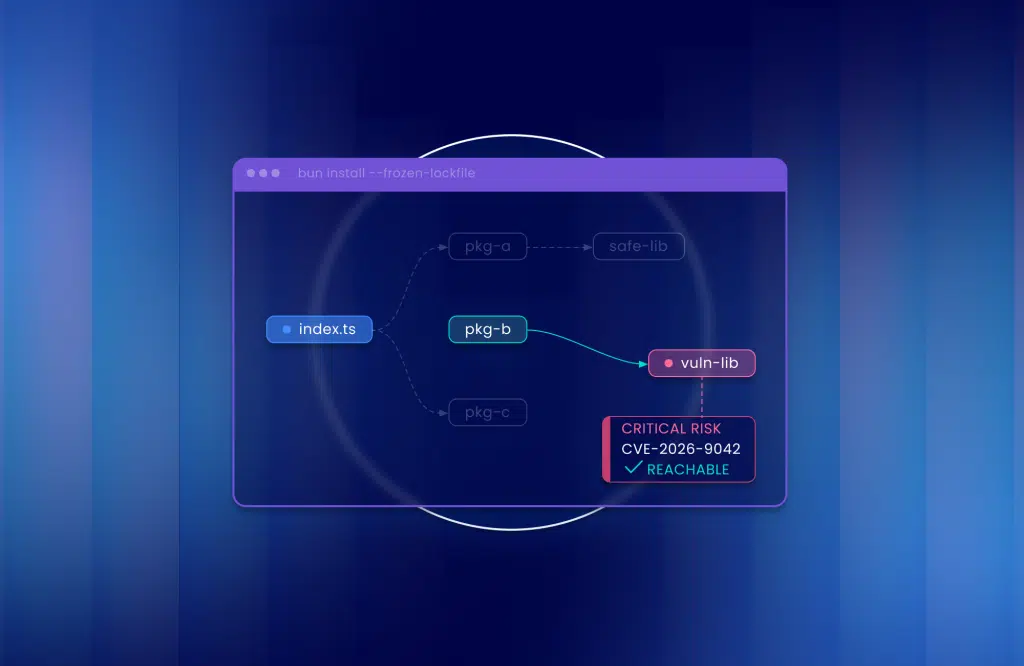
Agentic triage traces a finding’s data flow, tells you whether it holds up, and shows the exploitation path on request.
That is the Monday morning queue, already sorted before anyone opens it. What reaches a developer is what survived the check, and that is the whole difference between a backlog people work through and one they quietly stop reading.
3. Project classification: findings ranked by what they threaten
Contextual Project Classification labels findings by how sensitive the project is: payments, healthcare, anything touching PII.
A SQL injection in a billing service and the same pattern in an internal reporting tool are not the same problem. Treating them the same way is how a security team loses the argument with engineering about what gets fixed first.
4. Repository context: the scan knows what it is reading
Before any of that, a model works out what the codebase actually does, so findings get ranked against that service instead of against some generic baseline.
It runs ahead of the other three and feeds all of them. You only notice it when it is missing, which looks like a scanner being confidently wrong about what matters.
What the models are not allowed to do
None of the four decides anything on its own, and that is on purpose.
The model that writes a fix never decides whether the finding was real. Triage flags, a person decides, and the decision is recorded. Classification shapes priority without touching severity. The scan itself stays deterministic.
Here is the reasoning. Static analysis traces a path through code precisely and has no idea what that code is supposed to allow. A model is the opposite. It is good at working out intent, and it will confidently describe a data flow that does not exist.
Put a model everywhere and you ship confident nonsense at scale. Put it nowhere and every finding lands on a developer with no context at all.
The engine underneath runs at 38% higher precision and 48% higher recall than benchmark competitors, and scans up to 10x faster than traditional SAST. The models make that output easier to act on. They are not the thing producing it.
If you are evaluating anyone’s AI claims in this category, three questions sort it out fast. Where does the model sit? What can it decide without a person? And what does the output measure out at? We can answer all three.
Point Mend SAST at your own code and read the fixes it writes.
Secure proprietary code 10x faster
About the author