Table of contents
Related resources


Best SAST Tools in 2026: Top 10 Solutions Reviewed

What are SAST tools?
SAST (Static Application Security Testing) tools analyze an application’s source code to identify potential security vulnerabilities without executing the code. They are crucial for finding security flaws early in the development lifecycle, helping developers address issues before they become more costly and difficult to fix. This guide covers the best SAST tools available in 2026 and how to evaluate them.
Unlike dynamic analysis techniques, SAST operates without executing the program, focusing entirely on the static codebase. This approach allows SAST tools to detect security flaws through code scanning, such as injection vulnerabilities, insecure coding practices, and critical misconfigurations before an application is ever run in production or tested by end-users. For a comparison of static and composition-based approaches, see our guide to SAST vs SCA.
What modern SAST tools do:
- Prioritize real risk: They filter vulnerabilities by exploitability instead of flooding teams with raw findings.
- Fit developer workflow: They integrate scans into IDEs, pull requests, and CI/CD pipelines with minimal latency.
- Control noise: They baseline results, suppress duplicates, and reduce false positives through contextual analysis.
- Automated remediation workflows: They provide AI-driven fix suggestions and automated triage to accelerate patching.
- Keep up with technology: They expand coverage to new languages, frameworks, and AI-driven development practices.
- Source code analysis: They examine the code (source, bytecode, or binaries) to detect potential vulnerabilities like SQL injection, cross-site scripting (XSS), and buffer overflows.
- Provide feedback to developers: SAST tools integrate into development workflows, offering real-time feedback, much like code review tools, on security issues as developers write code.
- Automate vulnerability detection: They automate the scanning process to identify vulnerabilities.
- Integrate with development pipelines: They can be integrated into CI/CD pipelines, allowing for continuous security checks during the development process.
- Offer reporting and remediation guidance: SAST tools often provide detailed reports on vulnerabilities, including their location and potential impact, and may offer guidance on how to fix the issues.
Examples of SAST tools:
- Mend.io: Provides SAST integrated with dependency and supply chain security, helping manage open-source risks alongside code scanning.
- Semgrep: Lightweight, rule-based SAST tool with AI-assisted filtering to reduce false positives and integrate fixes into developer workflows.
- SonarQube: Broad static analysis platform that combines SAST with code quality checks and compliance reporting across multiple languages.
- Checkmarx: Enterprise SAST platform offering deep scanning, AI-powered query generation, and uncompiled code analysis.
- Veracode: Cloud-based SAST solution focused on whole-program analysis, low false positives, and developer-first integration.
- OpenText: Formerly Fortify, offering enterprise-grade SAST with AI-driven prioritization and flexible deployment options.
- Snyk Code: Developer-focused SAST tool providing real-time scans and context-aware autofixes inside IDEs and pull requests.
- Black Duck Software: Focuses on software supply chain security with SBOM management, compliance enforcement, and CI/CD integration.
- HCL Software: Enterprise vendor offering large-scale code scanning with AI-driven insights and broad enterprise deployment metrics.
- GitHub Advanced Security: Provides CodeQL-based SAST, dependency review, and secret scanning natively within GitHub repositories.
Editor’s note: Updated information about SAST tools to reflect features and capabilities in 2026.
What modern SAST tools do
Modern SAST tools have evolved beyond simple static scans to address the realities of fast-paced software development. They aim to be accurate, usable, and adaptable to modern engineering practices:
- Prioritize real risk: Instead of overwhelming teams with raw findings, modern SAST tools demonstrate exploitability by tracing proof paths through the code. This helps developers see whether an issue is reachable and exploitable, filtering out false positives and highlighting risks that matter.
- Fit developer workflow: To be effective, security checks must fit into the developer’s workflow. Modern tools run lightweight scans inside IDEs and pull requests with low latency. This enables developers to catch vulnerabilities as they write or review code, without slowing down delivery.
- Control noise: Noise reduction is critical. Modern tools baseline results across scans, suppress duplicates, and surface only new or changed issues. AI is used to cluster similar findings and reduce false positives, making security feedback more actionable.
- Automated remediation workflows: Beyond detection, modern SAST provides remediation support. AI-driven suggestions, code fixes, and automated triage workflows reduce the time between identifying a vulnerability and deploying a fix. This helps security scale across large development teams.
- Keep up with technology: Finally, modern SAST keeps pace with emerging technologies. They support new languages, frameworks, and coding paradigms driven by AI coding assistants and modern microservices architectures, ensuring coverage stays relevant as development practices evolve.
Notable SAST tools
Dedicated SAST tools
Here are some of the leading SAST solutions on the market today, their key features, delivery model and entry level pricing.
1. Mend.io
Mend SAST, an agentic static analysis tool, stops new vulnerabilities at the point of code creation. It delivers AI-powered fixes and immediate feedback directly into the AI development workflow, enabling developers to resolve security issues, whether human or AI-generated, the moment they appear.
Key features include:
- Cloud compliance and governance with on-premises scanning to keep sensitive data private while enabling cloud-based reporting, quality gates, and workflow automations.
- Agentic SAST support for AI code assistants that autonomously find and fix code flaws pre-commit.
- Reduced noise and high precision to pinpoint new vulnerabilities linked to recent changes, delivering 38% better precision and 48% better recall than competitors.
- Pre-production AI-powered fixes with every commit that are 46% more accurate than competitors, allowing developers to remediate risks without context switching.
- Near real-time feedback in the repo with scans up to 10x faster than traditional SAST tools, keeping pace with rapid AI development.
2. Semgrep
Semgrep is a static analysis tool that identifies security issues with minimal noise by combining traditional static analysis with AI-based reasoning. It focuses on detecting real, exploitable vulnerabilities by understanding code context, developer intent, and application logic rather than relying only on pattern matching.
Key features include:
- Context-aware detection: Combines static analysis with AI reasoning to identify complex issues such as authorization flaws and business logic vulnerabilities
- Reachability-based prioritization: Uses code context and reachability analysis to highlight exploitable issues and reduce irrelevant findings
- Automated noise reduction: Learns from prior triage decisions to suppress recurring false positives and improve signal over time
- In-workflow remediation: Provides actionable fix guidance directly in pull requests, IDEs, and developer tools
- Workflow integration: Supports CLI, CI/CD pipelines, IDEs, and integrations with platforms like GitHub, GitLab, and Jira
3. SonarQube
SonarQube is a static analysis platform that combines security scanning with code quality and reliability checks, providing continuous inspection of codebases throughout development. It emphasizes early detection and remediation by integrating automated analysis into CI/CD pipelines and developer tools.
Key features include:
- Automated code analysis: Continuously scans code across branches, pull requests, and merges as part of the development pipeline
- Real-time developer feedback: Delivers immediate, actionable insights within IDEs and DevOps tools
- AI-powered remediation: Generates context-aware fix suggestions using AI to speed up issue resolution
- Standards-based detection: Applies predefined rules aligned with industry security and compliance standards
- Flexible deployment options: Available as both SaaS and self-managed deployments with support for on-prem and cloud environments
4. Checkmarx
Checkmarx is a SAST platform that focuses on identifying and prioritizing exploitable vulnerabilities within the development workflow. It emphasizes context-aware analysis to help developers understand which issues actually impact the application, reducing alert fatigue. The platform embeds security capabilities directly into IDEs and pipelines.
Key features include:
- Risk-based prioritization: Uses context and application security posture management to surface vulnerabilities that are truly exploitable
- In-IDE security integration: Embeds scanning and remediation guidance directly into developer environments to avoid context switching
- AI-assisted remediation: Provides code suggestions, explanations, and refactoring guidance to help fix issues securely
- Unified AppSec platform: Combines multiple security testing capabilities into a single system for visibility and coordination
- Scalable analysis: Supports large codebases and diverse technologies with flexible deployment and policy controls
5. Veracode
Veracode is a SAST platform focused on identifying and reducing application risk across the software development lifecycle. It combines static analysis with AI-driven insights to detect vulnerabilities at their root cause and prioritize remediation. The platform is designed to integrate into development workflows, helping teams continuously scan code, enforce security policies, and fix issues early with minimal manual configuration.
Key features include:
- Root cause analysis: Identifies underlying causes of vulnerabilities to support more effective remediation
- Lifecycle coverage: Applies security scanning and governance across all stages of the development process
- AI-assisted prioritization: Helps teams focus on critical risks by analyzing impact and exploitability
- Developer-centric guidance: Provides actionable recommendations within developer workflows
Evaluating other options? See our roundup of Veracode alternatives.
6. OpenText
OpenText static application security testing (formerly Fortify) is a SAST solution that detects vulnerabilities early while supporting enterprise-scale development and compliance requirements. It focuses on integrating security into DevOps processes and managing risk across complex environments. The platform is part of a broader ecosystem for secure information and application management.
Key features include:
- Early vulnerability detection: Identifies security issues during development to reduce downstream risk
- Enterprise integration: Connects with development and DevOps tools to embed security into workflows
- Scalable deployment options: Supports cloud, private cloud, and on-premises environments
- Compliance support: Aligns with governance and regulatory requirements across industries
- AI-assisted prioritization: Uses intelligent analysis to highlight critical vulnerabilities and reduce noise
7. Snyk Code
Snyk Code is a developer-focused SAST tool that emphasizes fast, in-context vulnerability detection and remediation. It performs static analysis without requiring full builds, allowing developers to identify and fix issues directly in their IDEs or pull requests. The platform uses a large knowledge base and machine learning models to provide accurate results and prioritize the most relevant risks based on application context.
Key features include:
- Real-time scanning: Analyzes code instantly in IDEs and pull requests without requiring builds
- Pre-validated auto-fixes: Provides tested remediation suggestions that can be applied directly in the workflow
- Context-aware prioritization: Focuses on newly introduced or exposed vulnerabilities to reduce noise
- Extensive knowledge base: Uses millions of data flow models and open-source insights to improve detection accuracy
- Broad ecosystem support: Integrates with popular languages, IDEs, and CI/CD tools
Application security / DevSecOps platforms
8. Black Duck Software
Black Duck Software is an application security platform focused on managing software supply chain risk and securing development at scale. It integrates multiple security testing approaches into a unified system, helping organizations automate security checks and maintain visibility across the development lifecycle.
Key features include:
- Unified AppSec platform: Consolidates multiple security tools and signals into a single system for centralized risk management
- Supply chain security: Identifies and manages risks in open-source and third-party dependencies
- Automated security workflows: Embeds testing and risk detection across CI/CD pipelines without slowing development
- Enterprise risk visibility: Provides centralized insights and policy-driven prioritization across applications
- Support for AI-driven development: Secures code generated in modern development environments and pipelines
Looking for alternatives? See our guide to Black Duck alternatives.
9. HCL Software
HCL Software provides application security capabilities as part of a broader enterprise software portfolio that includes cybersecurity, DevOps, and AI-driven operations. Its SAST-related offerings focus on vulnerability detection, mitigation, and remediation across the software lifecycle, with an emphasis on operating at large scale in enterprise environments.
Key features include:
- Integrated cybersecurity capabilities: Combines vulnerability detection and remediation within a broader DevSecOps and enterprise security ecosystem
- High-throughput scanning: Supports large-scale code analysis, with reported capacity to scan significant volumes of code per hour
- Enterprise-scale deployment: Designed to operate across large organizations with extensive infrastructure and user bases
- AI-driven operations support: Aligns security analysis with AI-powered operational and automation capabilities
- Compliance and secure DevOps alignment: Emphasizes secure development practices and regulatory compliance across environments
10. GitHub Advanced Security
GitHub Advanced Security is a set of security features integrated directly into GitHub repositories, enabling developers to identify and remediate vulnerabilities within their existing workflows. It combines static analysis (via CodeQL and third-party tools) with dependency and secret scanning to provide comprehensive code security.
Key features include:
- Code scanning with CodeQL: Detects vulnerabilities and coding issues using GitHub’s native analysis engine or third-party tools
- Automated remediation: Provides generated fixes for security findings through features like Copilot Autofix
- Dependency review: Analyzes changes to dependencies and flags known vulnerabilities before merging
- Secret scanning and push protection: Detects and prevents exposure of sensitive credentials in code repositories
- Security visibility and governance: Offers organization-wide risk insights, campaigns, and automated triage rules
Best practices for using SAST tools
Here are some of the ways that organizations can improve their use of SAST tools.
1. Integrate where developers work
SAST tools are most effective when they meet developers where they write and review code. Embedding scans directly into IDEs and pull requests ensures that security checks happen in real time without interrupting workflows. This reduces the feedback loop, allowing developers to fix vulnerabilities before they move downstream, where remediation costs increase. Lightweight, incremental scans are preferable to heavy full-build analyses at this stage, as they provide fast and actionable results.
Integrating SAST into CI/CD pipelines is equally important to maintain DevOps speed. Security checks must run in parallel with build and deployment steps, not as blockers that slow delivery. A well-integrated SAST solution provides quick pass/fail signals, with detailed findings available for deeper inspection. This allows teams to maintain velocity while still enforcing consistent security guardrails at every stage of development. For a focused view on pipeline integration, see our guide to SAST tools for DevSecOps teams.
2. Prioritize with context
SAST findings can easily overwhelm teams if presented without prioritization. Contextual triage using exploitability, impact, and code relevance helps teams focus on vulnerabilities that matter and cut down on SAST false positives. Modern SAST tools can perform reachability analysis to determine if a flaw is actually exploitable within the application’s execution paths, reducing noise and false positives. This allows developers to concentrate effort on fixing issues that pose real security risks rather than chasing low-value alerts.
Stack awareness is another key factor in prioritization. A vulnerability that affects a critical service written in production languages should take precedence over an issue in a test harness or a deprecated component. AI-driven triage can automate this process by ranking vulnerabilities based on business-critical factors, ensuring that limited developer resources are spent on the flaws most likely to be exploited.
3. Accelerate remediation
Detection alone is insufficient if remediation lags. SAST tools should provide developers with AI-assisted fixes, code snippets, or precise guidance on where and how to patch issues. Automated remediation suggestions help reduce mean time to repair (MTTR) and ensure that fixes are aligned with the programming language and framework in use. This prevents wasted time on generic or inapplicable fixes that developers would otherwise need to adapt manually.
Autofix features can further accelerate remediation when combined with mandatory review steps. Developers receive proposed code changes that resolve vulnerabilities, which they can then validate and merge. This keeps control in the hands of engineers while eliminating repetitive manual patching. At scale, automated remediation workflows reduce backlog, improve consistency, and free up developer capacity for feature development.
4. Stay current with tech shifts
The programming landscape evolves quickly, and SAST tools must keep pace to remain relevant. Emerging languages like Rust, Dart, and Solidity introduce new security models and risks that older scanning rules may not detect. Similarly, AI frameworks such as LangChain, PyTorch, and TensorFlow bring unique attack surfaces, including prompt injection and model manipulation vulnerabilities. Organizations that fail to update SAST rules risk leaving critical blind spots in their coverage.
Staying current requires continuous updating of rule sets and vulnerability databases. Security teams should regularly review vendor updates, community rules, and new research on language-specific flaws. Some modern SAST platforms support dynamic rule delivery, ensuring tools are always aligned with the latest threats. By maintaining up-to-date coverage, organizations can proactively secure applications against both traditional vulnerabilities and new classes of risks driven by AI adoption and emerging technologies.
5. Measure outcomes, not just scans
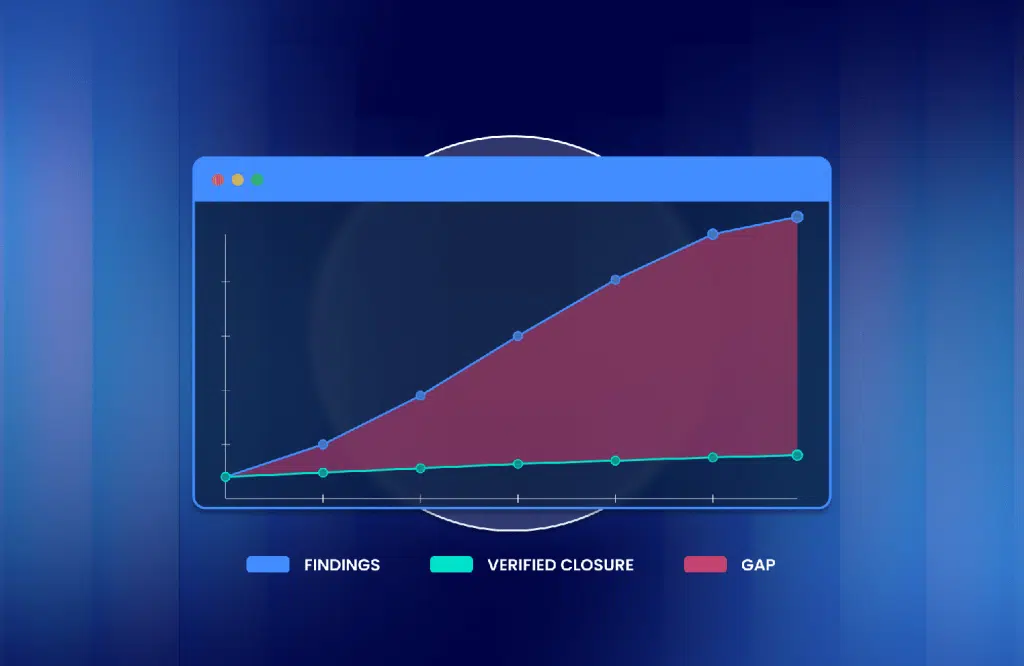
Running frequent scans is not enough—organizations must track whether vulnerabilities are actually being resolved. Metrics such as fix rates, mean time to repair, and developer adoption rates provide a clearer picture of real security improvements. For example, a high scan frequency with a low fix rate indicates that findings are not actionable or not being prioritized effectively. Tracking these metrics ensures that SAST programs deliver measurable outcomes instead of generating unused reports.
Another key measure is scan latency in developer workflows. If pull request scans take too long, developers may bypass or resist the tool, reducing adoption. Continuous monitoring of latency and feedback loops helps maintain usability. By focusing on outcome-driven KPIs rather than raw scan counts, organizations can avoid shelfware scenarios where tools are present but not delivering value. This ensures security investments align with business goals and development velocity.
Conclusion
SAST tools play a critical role in secure software development by enabling early detection of vulnerabilities, integrating security into developer workflows, and providing actionable guidance for remediation. When combined with tailored rulesets, continuous monitoring, and developer education, they help organizations build software that is resilient against evolving security threats while maintaining development speed.