Table of contents
Related resources


Top 13 AI security testing solutions for dev pipelines in 2026

TL;DR: AI security testing solutions find vulnerabilities in code, dependencies, and AI components across the dev pipeline.
What are AI security testing solutions?
AI security testing solutions protect CI/CD pipelines from two critical angles: securing the AI-generated code your developers write using LLM assistants, and vulnerability testing the AI applications/models you deploy. Modern tools integrate directly into pipelines to scan source code, evaluate prompts, track pipeline dependencies, and auto-remediate issues before they hit production.
Pipeline core testing categories:
AI-assisted AppSec (for all codebases):
Traditional SAST/DAST tools struggle with the velocity and style of AI-written code. AI-native tools catch risks standard rules engines miss:
- Business logic flaws: Spotting logical bypasses created by loosely defined AI generation.
- Taint analysis: Tracing untrusted inputs from third-party APIs or prompts all the way to sensitive sinks.
- Auto-remediation: Recommending or automatically applying a context-aware pull request patch.
LLM and agent security testing (for AI apps):
If you build AI applications, your pipeline needs checks for non-deterministic software behavior:
- Prompt injection testing: Automated evaluation pipelines simulating malicious user prompts.
- Data leakage prevention: Scanning files, logs, and retrieval-augmented generation (RAG) datasets for PII or secrets.
- Serialization auditing: Checking code for insecure formats (like Python pickle) and replacing them with secure schemas like SafeTensors.
This is part of a series of articles about black-box testing.
AI security testing solutions at a glance
The table below summarizes the key differences between the solutions covered in this article. We explore each one in more detail in the sections that follow.
| Category | Solution | Best for | Key strengths | Things to consider |
|---|---|---|---|---|
| AI-assisted application security platforms | 1. Mend.io | Unifying code, open source, and AI security in one platform | AI-tuned SAST and SCA, reachability, IDE and PR fixes, AI red teaming | Advanced AI testing needs a separate Mend AI license |
| 2. Checkmarx One | Enterprises securing the full SDLC from one platform | Hybrid scanning, ASPM correlation, agentic IDE and CI/CD security | False positives and long scans before tuning; enterprise cost | |
| 3. Snyk | Developer-first teams fixing code and dependency risk in workflow | Reachability, one-click IDE and PR fixes, AI guardrails, broad coverage | Alert noise at scale; SAST less mature than SCA; tiered pricing | |
| 4. Veracode | Regulated enterprises needing compliance-grade AppSec at scale | SAST, DAST, SCA, package firewall, AI fixes, deep SDLC integration | Complex licensing; slower scans; admin-led false-positive mitigation | |
| 5. Cycode | Consolidating AST, ASPM, and supply chain on one platform | Secrets, pipeline posture, exploitability and PR-ready fix agents | No container-scan CLI; can slow at large asset volumes | |
| 6. Aikido Security | Dev teams wanting consolidated code-to-cloud scanning, low noise | 15+ scanners, AutoTriage, AutoFix PRs, fast setup, free tier | Steep free-to-paid jump; limited deep customization | |
| 7. Semgrep | Fast, customizable SAST with custom YAML rules | Multimodal SAST, low-latency CI scans, reachability, PR fixes | Out-of-box noise; rule-writing learning curve; narrow scope | |
| 8. SonarQube | Enforcing code quality and security via CI/CD quality gates | SAST, taint analysis, secrets, IaC, quality gates, PR decoration | Complex setup; AI fixes are manual; self-host upkeep cost | |
| LLM and AI agent security testing tools | 9. Lakera | Securing GenAI apps and agents at runtime and pre-release | Real-time prompt-attack guardrails, red teaming, low-latency API | Limited customization; separate evals and observability needed |
| 10. Mindgard | Red teaming AI models, agents, and apps before attackers | Autonomous recon and attack chains, CI/CD testing, runtime defense | Difficult setup; English-only; advanced for small teams | |
| 11. Giskard | Continuously testing LLM agents for security and quality | Multi-turn attacks, context-aware tests, OWASP coverage, black-box | Needs an LLM API key; Hub pricing opaque; v3 still maturing | |
| 12. Promptfoo | Developers red teaming LLM apps and agents inside CI/CD | CI-native red teaming, PR findings, custom attacks, MCP testing | Needs upfront test setup; LLM grader adds cost; enterprise gating | |
| 13. HiddenLayer | Enterprises securing the AI model supply chain and runtime | Model scanning in CI/CD, SARIF output, AIBOM, attack simulation | Hard to deploy; documentation thin; pricing opaque for small teams |
Why AI security testing belongs in CI/CD pipelines
There are several reasons to integrate security testing into the development pipeline:
AI-generated code can introduce hidden vulnerabilities
AI-generated code can introduce subtle security flaws that are not easily detected by traditional static analysis tools. Large language models and AI code assistants may suggest insecure patterns, overlook edge cases, or inadvertently include vulnerable dependencies. As organizations increasingly rely on AI to speed up development, the risk of shipping insecure code grows, especially when generated code is accepted without thorough review.
How AI helps:
Because AI-generated code may appear syntactically correct and even pass basic functional tests, security issues can go unnoticed until exploitation occurs. Embedding AI security testing into CI/CD pipelines ensures that every code change, whether written by a human or AI, undergoes rigorous automated analysis.
AI applications create new attack surfaces
AI-driven applications introduce novel attack surfaces, including model APIs, prompt injection vectors, and data pipelines. Unlike traditional software, AI systems can be manipulated through crafted inputs, model inversion, or adversarial examples, potentially exposing sensitive data or enabling unauthorized actions. Attackers may also target the data used to train models, poisoning it to alter AI behavior in production.
How AI helps:
Integrating AI security testing into CI/CD pipelines is critical to identifying and mitigating these risks early. Automated tools can simulate adversarial scenarios, validate input sanitization, and check for model drift or unexpected behaviors. By continuously testing and monitoring AI components, organizations can stay ahead of emerging threats and maintain a robust security posture as the complexity of AI-based attack surfaces evolves.
Manual security reviews do not scale
Manual security reviews are resource-intensive and struggle to keep pace with modern development cycles, especially when AI is generating large volumes of code or when applications are updated frequently. Human reviewers may miss subtle vulnerabilities introduced by AI-generated logic, and the sheer volume of code can lead to review fatigue or inconsistent coverage.
How AI helps:
Automated AI security testing scales with the speed and volume of development, providing consistent and repeatable analysis across every commit, pull request, and deployment. These solutions can flag security issues as soon as they are introduced, allowing teams to fix problems before they propagate. By automating security reviews, organizations can maintain high standards without slowing down innovation or overburdening security teams.
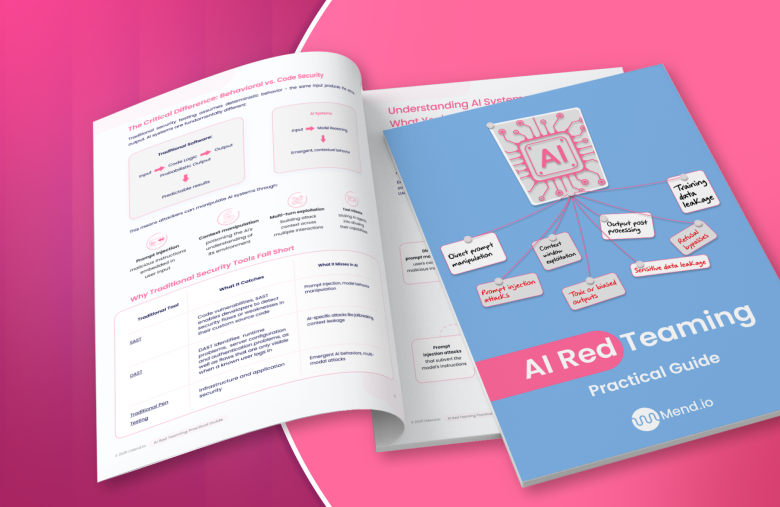
Stop vibe-testing your AI
Prompt injection, jailbreaking, PII leakage. Get the test cases, the process, and a one-page checklist to run them in CI.
Pipeline core testing categories
AI-assisted AppSec
AI-assisted application security (AppSec) leverages machine learning to enhance traditional security testing methods. These tools analyze codebases, detect vulnerabilities, and provide contextual recommendations for remediation. By learning from vast repositories of secure and insecure code, AI-assisted AppSec solutions can identify complex patterns and emerging threats that may elude conventional static analysis.
AI-powered AppSec tools can prioritize vulnerabilities based on real-world exploitability, reducing noise and helping development teams focus on critical issues. They also adapt over time, improving detection accuracy and keeping pace with new attack techniques. Integrating AI-assisted AppSec into CI/CD pipelines ensures that security checks remain thorough and relevant, even as application architectures and threat landscapes evolve.
LLM and agent security testing
Security testing for large language models (LLMs) and AI agents focuses on the unique risks these systems present, such as prompt injection, unauthorized data access, and model manipulation. Specialized tools simulate adversarial prompts, validate input/output boundaries, and check for compliance with security policies. By automating these checks, organizations can protect AI-driven interfaces from both known and emerging attack vectors.
Effective LLM and agent security testing includes continuous monitoring for model drift, unexpected behaviors, and data leakage. This ensures that as models are updated or retrained, security controls remain effective. Integrating these tests into development pipelines helps organizations catch vulnerabilities early, reduce remediation costs, and maintain trust in AI-powered applications.
Where AI security testing fits in the dev pipeline
1. Pre-commit
Pre-commit security testing acts as the first line of defense by checking code for vulnerabilities before it is even added to the shared repository. Automated tools can scan for secrets, insecure patterns, and dependency risks as developers write code, providing immediate feedback and helping prevent security issues from entering version control. This early intervention reduces the volume of vulnerabilities that progress further down the pipeline.
Embedding AI security testing at the pre-commit stage also encourages secure coding practices. Developers receive real-time alerts and recommendations, which fosters a security-first mindset. Over time, this reduces the overall risk profile of the codebase and minimizes the need for extensive rework or late-stage fixes.
2. Pull request
During the pull request stage, security testing validates all proposed changes before they are merged into the main branch. Automated analysis tools review the new code, as well as its interactions with existing code, to identify vulnerabilities, misconfigurations, and policy violations. This ensures that security issues are caught in the context of the entire application, not just in isolation.
Integrating AI security testing into pull request workflows enables peer reviewers to focus on business logic and design, while automated checks handle routine security validation. This approach simplifies code reviews, maintains high security standards, and prevents vulnerabilities from being introduced through collaborative development.
3. Build
In the build stage, security testing solutions analyze the compiled application and its dependencies for vulnerabilities. This includes scanning for outdated libraries, insecure configurations, and embedded secrets. By automating these checks, organizations can ensure that every build artifact meets security requirements before progressing to testing or deployment.
Build-stage security testing also helps enforce compliance with organizational policies and regulatory standards. Automated gates can halt builds that fail security checks, preventing vulnerable artifacts from reaching later pipeline stages. This proactive approach reduces the risk of deploying insecure software and supports continuous delivery without compromising security.
4. Test and staging
During the test and staging phases, security testing extends to dynamic analysis and simulated attacks. Tools may perform fuzz testing, API security checks, and penetration testing against the running application in a controlled environment. This helps uncover vulnerabilities that static analysis may miss, such as runtime misconfigurations or flaws in third-party integrations.
AI security testing in staging environments also validates the effectiveness of existing security controls and monitors for unexpected behaviors or data leaks. By identifying issues in an environment that closely mirrors production, organizations can remediate problems before deployment, reducing the risk of costly incidents post-release.
5. Deployment
At deployment, security testing ensures that only code meeting security standards is released to production. Automated validation checks verify that all previous security gates have passed and that the deployment process itself does not introduce new risks, such as misconfigured infrastructure or unprotected endpoints.
Deployment-stage security controls can enforce policy compliance and trigger alerts or rollbacks if issues are detected. This final checkpoint safeguards the production environment and provides assurance that security has been maintained throughout the entire development lifecycle.
6. Runtime
Runtime security testing monitors applications in production for active threats, vulnerabilities, and anomalous behavior. This includes real-time scanning for known exploits, intrusion detection, and monitoring for unauthorized access or data exfiltration. AI-driven runtime monitoring can adapt to evolving threats and detect subtle patterns indicative of attacks.
By integrating runtime security testing, organizations gain continuous visibility into the security posture of deployed applications. This enables rapid response to incidents, supports compliance requirements, and ensures that security remains effective even as applications and threat landscapes change.
Core capabilities to look for in an AI security testing platform
When choosing an AI security testing solution, consider the following features:
- SAST for AI-generated and human-written code: Static Application Security Testing (SAST) should support both AI-generated and human-written code. Effective platforms can parse diverse programming styles and detect vulnerabilities, regardless of how the code was authored. This is crucial as AI-generated code may introduce unique patterns or subtle logic errors that traditional tools might miss.
- Software composition analysis (SCA): This identifies and manages risks associated with third-party libraries and open-source dependencies. These tools scan application components to detect outdated, vulnerable, or non-compliant packages, providing visibility into the software supply chain. SCA is especially important as modern applications (AI-driven or otherwise) often rely heavily on external code.
- Secrets detection: This identifies sensitive credentials that have been accidentally exposed in source code, configuration files, logs, or infrastructure definitions. These secrets may include API keys, access tokens, database credentials, encryption keys, and cloud provider credentials. When exposed, they can provide attackers with direct access to systems and data, often bypassing traditional security controls.
- IaC and cloud configuration scanning: Infrastructure as code (IaC) and cloud configuration scanning evaluates infrastructure definitions and cloud resources for security misconfigurations before deployment. These tools analyze technologies such as Terraform, Kubernetes manifests, AWS CloudFormation, and cloud service configurations to identify issues like overly permissive access controls, exposed services, and insecure network settings.
- LLM application security testing: This focuses on the security of applications that interact with large language models. These tools assess risks such as prompt injection, insecure plugin interactions, excessive agent permissions, data leakage, and unauthorized access to connected systems. Testing often involves simulated attacks designed to expose weaknesses in application logic and model integrations.
- Policy-as-code gates: These enforce security requirements through automated rules that are evaluated during the development and deployment process. Instead of relying on manual approvals, organizations can define security, compliance, and operational policies as machine-readable code that is consistently applied across projects and environments.
- Developer remediation guidance: Finding vulnerabilities is only part of the security process; developers also need clear guidance on how to fix them. Effective AI security testing platforms provide contextual remediation recommendations that explain the root cause of an issue and offer practical steps for resolution. This helps teams address vulnerabilities more quickly and accurately.
Notable AI security testing solutions
How we selected these solutions: We shortlisted AI security testing solutions based on their ability to detect vulnerabilities across code, open source dependencies, and AI components, and to embed automated testing into development pipelines, from the IDE and pull request through CI/CD, build, and runtime.
AI-assisted application security platforms
1. Mend.io
Best for: Unifying code, open source, and AI security in one platform
Strengths: AI-tuned SAST and SCA, reachability, IDE and PR fixes, AI red teaming
Things to consider: Advanced AI testing needs a separate Mend AI Premium license
Mend.io is an AI-native application security platform that combines two engines, Mend SAST and Mend SCA, with container image scanning in a single product. It is built to secure both AI-generated and human-written code, applying shared policy, prioritization, and remediation workflows across the application. Mend SAST uses incremental, differential scanning that analyzes only changed code on each commit, and pairs deterministic analysis with AI-tuned rules that suppress unreachable code paths. Mend SCA adds reachability-driven open source analysis prioritized by EPSS and CVSS 4.0, alongside automated dependency management.
Key features include:
- Differential SAST in the repo and IDE: Mend SAST runs incremental scans on commit and a lightweight scan at the moment of code generation in the IDE, with deep static analysis at commit so changed code is checked without rescanning the full repository.
- Secrets scanning that fails builds: Mend SAST detects hardcoded credentials, API keys, tokens, and certificates across source code and configuration files, triggering automated policy violations that can fail the build before exposed secrets reach production.
- Reachability-driven SCA with dependency automation: Mend SCA prioritizes open source and container risk by reachability, EPSS, and CVSS 4.0, and uses automated dependency management to resolve issues across the codebase.
- AI coding assistant and pull request integration: Mend AppSec integrates with Cursor, Windsurf, and Copilot to scan code as it is generated, and delivers AI-assisted fixes inside IDEs and pull requests with CI/CD feedback across SAST and SCA.
- Governance gates before merge: A unified policy engine enforces open source license policy, tracks remediation SLAs, and blocks non-compliant components before merge across every repository.
- AI red teaming and AI-BOM through Mend AI: Mend AI detects AI components to build a live AI-BOM, runs adversarial simulations to surface jailbreaks, hallucinations, bias, and data leaks, and applies system prompt hardening, with 20+ prebuilt tests for AI-specific risks and exportable risk reports.
Limitations (as reported by users on Gartner Peer Insights):
- Tuning at large scale: At very large or complex enterprise scale, some UI and reporting features benefit from tuning to keep performance sharp.
- Project-level exclusions: Exclusions are managed on a per-repository basis rather than allowing an entire project to be excluded in a single step.
- Premium licensing for AI testing: The full set of AI security capabilities, including AI red teaming, sits within Mend AI Premium, a separate license.
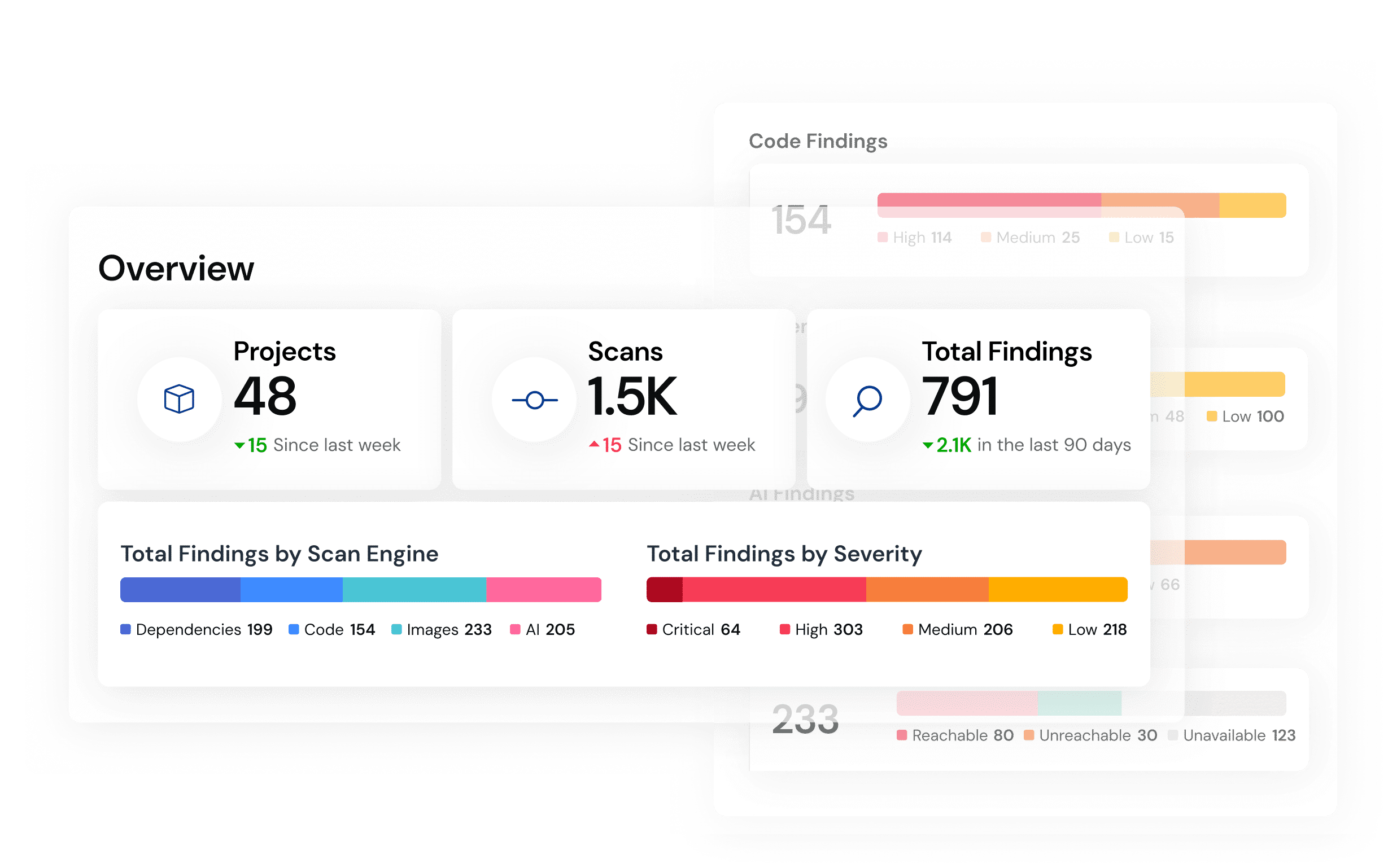
2. Checkmarx One
Best for: Enterprises securing the full SDLC from one platform
Strengths: Hybrid scanning, ASPM correlation, agentic IDE and CI/CD security
Things to consider: False positives and long scans before tuning; enterprise cost
Checkmarx One is a cloud-native application security platform that brings multiple testing engines together under a single risk view. Its hybrid scanning engine combines deterministic rules, which catch known vulnerabilities, with AI reasoning that adapts to new coding patterns, and consolidates findings into one view ranked by exploitability. The platform spans developer security engines such as next-generation SAST, secrets detection, IaC security, and API security, alongside supply chain security, SCA, container security, and dedicated capabilities for AI, including AI-BOM and DAST for AI.
Key features include:
- Hybrid scanning across every layer: Deterministic rules and AI reasoning run together across SAST, SCA, secrets, IaC, API, and container engines, producing findings ranked by exploitability rather than raw severity.
- Agentic IDE and pre-commit security: Developer Assist provides real-time vulnerability detection and contextual fixes in the IDE, with in-IDE guardrails that prevent risky code before commit.
- Automated triage and remediation: Triage and Remediation Assist prioritize risk and generate fixes, reducing manual triage and rework inside developer workflows.
- Broad pipeline and toolchain integration: Checkmarx One connects to IDEs such as VS Code, JetBrains, Visual Studio, and Eclipse, to SCMs including GitHub, GitLab, Azure DevOps, and Bitbucket, and to CI/CD tools such as Jenkins, Bamboo, and TeamCity, with PR hooks and feedback to Jira, Slack, and Teams.
- ASPM correlation and governance: The ASPM control plane correlates signals across code, AI supply chain, and runtime, enforcing enterprise policy consistently across tools and environments.
- AI supply chain coverage: AI-BOM generation, model scanning, and MCP server discovery extend testing to the AI components in the codebase.
Limitations (as reported by users on G2):
- False positives before tuning: Reviewers report a high number of false positives out of the box, with one noting a large volume specifically for Kotlin projects that required manual review.
- Scan time and resource use: Scans can take significant time on large projects, and running the platform can demand substantial RAM and processing power.
- Setup and learning curve: Initial deployment can take several days, and the platform carries a steep learning curve for new users.
- Cost: Several reviewers describe the platform as expensive, which led some smaller teams to stop using it.

3. Snyk
Best for: Developer-first teams fixing code and dependency risk in workflow
Strengths: Reachability, one-click IDE and PR fixes, AI guardrails, broad coverage
Things to consider: Alert noise at scale; SAST less mature than SCA; tiered pricing
Snyk is an AI-native, developer-focused security platform that covers custom code, open source dependencies, containers, and cloud infrastructure from a single platform. Its products include Snyk Open Source for software composition analysis, Snyk Code for static analysis, and capabilities for containers, IaC, and APIs. Snyk's approach is an AI Security Fabric that spans securing the software supply chain, securing AI-driven development, and securing AI-native software.
Key features include:
- Prevention guardrails at inception: Snyk enforces secure-at-inception guardrails across AI coding assistants, IDEs, and pipelines to stop vulnerabilities before they enter the codebase.
- Reachability-based prioritization: Deep application intelligence, risk scores, and reachability analysis identify which vulnerabilities are actually exploitable, focusing attention on real business risk.
- One-click fixes in the IDE and pull request: AI-accelerated remediation provides trusted fixes directly in the IDE and pull request to raise fix rates and reduce security debt.
- Foundational visibility and inventory: Automatic discovery inventories every asset across code, dependencies, and AI models as the starting point for the program.
- Governance and measurement: Automated policy enforcement and analytics track risk reduction, developer adoption, and program ROI.
- Agentic runtime orchestration: Snyk's agentic orchestrator, Evo, provides autonomous, runtime protection for non-deterministic, AI-native applications.
Limitations (as reported by users on G2):
- Alert noise on large projects: Low-severity findings can be overwhelming on larger projects, and tuning filters to a team's risk tolerance takes time.
- SAST maturity: Reviewers describe Snyk Code results as less mature than the SCA side, with more false positives and less context on why something is flagged.
- Pricing at scale: The jump between tiers can feel steep, with features such as deeper reporting and SSO locked behind higher plans.
- Fix suggestions that break builds: Recommended fixes sometimes introduce breaking changes, leaving teams to do manual research.

4. Veracode
Best for: Regulated enterprises needing compliance-grade AppSec at scale
Strengths: SAST, DAST, SCA, package firewall, AI fixes, deep SDLC integration
Things to consider: Complex licensing; slower scans; admin-led false-positive mitigation
Veracode is an application risk management platform that identifies, prioritizes, and mitigates risk across the software development lifecycle. Its suite includes a Risk Manager for posture management that pinpoints the owner and root cause of each issue and recommends a next best action, plus SAST, DAST, and SCA engines. Veracode Fix applies AI-powered remediation trained on curated data to generate reference patches, and a Package Firewall proactively stops vulnerabilities, malware, and policy violations before they reach development pipelines.
Key features include:
- Code-to-cloud scanning in the IDE: SAST, DAST, SCA, IaC, and container scans integrate into IDEs for instant, actionable feedback as developers work.
- AI-powered remediation: Veracode Fix generates reference patches from curated data to automate flaw fixes and shorten remediation time.
- Package Firewall before the pipeline: The firewall stops vulnerabilities, malware, and policy violations before they reach development pipelines.
- Posture management with next best action: Risk Manager prioritizes vulnerabilities, identifies owner and root cause, and recommends the next remediation step.
- DAST for running apps and APIs: Dynamic analysis identifies runtime vulnerabilities in web applications and APIs through simulated attacks.
- SDLC and CI/CD integrations: Veracode integrates testing into developer tools and pipelines and supplies a proprietary threat feed through Software Supply Chain Intelligence.
Limitations (as reported by users on G2):
- Complex licensing: Reviewers describe the license model as overly complex and hard to justify alongside the customer success package.
- Admin-led flaw mitigation: Mitigating false positives is not straightforward and often depends on the Veracode admin team, interrupting the workflow.
- Inconsistent scan results: Some users report the same flaw appearing in one scan, disappearing in the next, and reappearing later.
- Regional feature gaps: Reviewers note more features are delivered to the US market than the EU, and not always as described in the documentation.

5. Cycode
Best for: Consolidating AST, ASPM, and supply chain on one platform
Strengths: Secrets, pipeline posture, exploitability and PR-ready fix agents
Things to consider: No container-scan CLI; can slow at large asset volumes
Cycode is an agentic development security platform that unifies application security testing, application security posture management, and software supply chain security on one model. It is organized around three pillars: Control, which applies preventative guardrails across AI tools, prompts, and code at the point of creation; Context, delivered through a Context Intelligence Graph that spans the development lifecycle, AST, supply chain, and posture management; and Autonomy, where an orchestrator named Maestro coordinates agents that remediate issues and open pull-request-ready fixes.
Key features include:
- Secrets and pipeline posture: Secrets scanning and source control and CI/CD security harden the pipeline attack surface, with scanning that runs in version control on pull requests to surface issues before the pipeline runs.
- Exploitability agent: An exploitability agent confirms whether a CVE is actually reachable, filtering findings down to risk that is reachable and exposed.
- PR-ready remediation: A remediation agent generates pull-request-ready fixes with reasoning, orchestrated by Maestro across the vulnerability lifecycle.
- Change impact analysis on merges: Risk is assessed on every merge so teams understand the blast radius of a change before it ships.
- Consolidated AST scanning: SAST, SCA, IaC, and container scanning run on one platform, with ConnectorX ingesting third-party scanner findings into a single graph.
- Build hardening and MCP access: Cimon hardens builds and protects artifact integrity, and a Cycode MCP server brings graph intelligence into AI-native development tools.
Limitations (as reported by users on G2):
- Limited cloud-service integrations: One reviewer noted Cycode lacks integrations with many AWS services, making it harder to track vulnerabilities by the systems hosting applications rather than just code and artifacts.
- No CLI for container scanning: The container scanning module lacks a CLI, which limits how fully it can be integrated into pipelines.
- Performance at scale: With many assets onboarded, the platform can become slow for large enterprises.
- Posture data alignment: Some users report ASPM data does not always align with source tools because Cycode applies its own logic during import.

6. Aikido Security
Best for: Dev teams wanting consolidated code-to-cloud scanning, low noise
Strengths: 15+ scanners, AutoTriage, AutoFix PRs, fast setup, free tier
Things to consider: Steep free-to-paid jump; limited deep customization
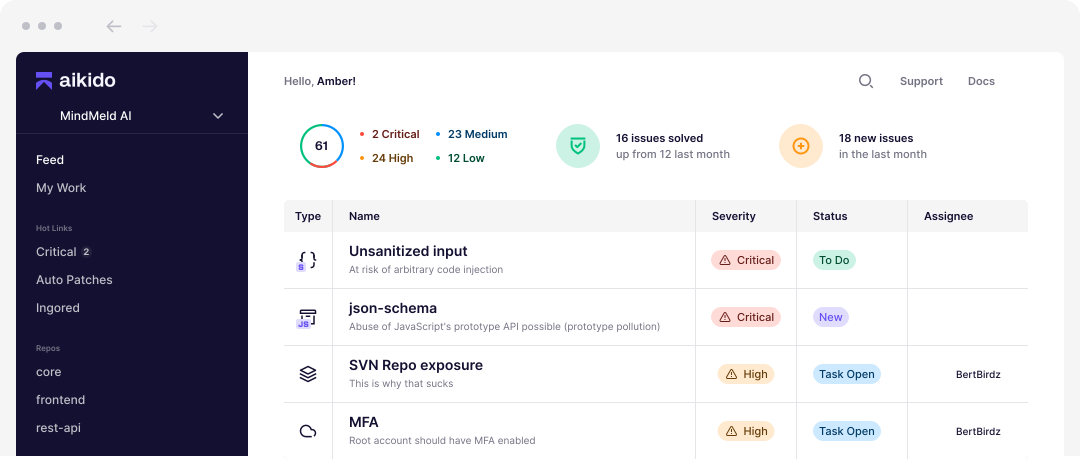
Aikido Security is a unified application security platform that consolidates scanning from code to runtime in a single system. Its code module covers static analysis (SAST), open source dependency scanning (SCA), AI code quality review, secrets detection, malware detection, IaC scanning for Terraform, CloudFormation, and Kubernetes, and outdated software detection. The cloud module adds cloud posture management, virtual machine scanning, and container and Kubernetes scanning, while the attack module provides AI pentesting and continuous autonomous pentesting, plus surface monitoring through DAST.
Key features include:
- Consolidated code scanning: SAST, SCA, secrets detection, malware detection, and IaC scanning run together across the codebase, integrating into repos, CI, and the IDE.
- AutoTriage to cut noise: Aikido evaluates alerts in the context of code and infrastructure and deprioritizes issues that do not pose real risk, with deduplication grouping related alerts.
- AutoFix pull requests: The platform generates reviewable pull requests to fix issues across code, dependencies, infrastructure, and containers, with one-click bulk fixes for related alerts.
- Continuous autonomous pentesting: Agents pentest every deployment, validate exploitability, generate patches, and retest the fix before code reaches production.
- Cloud and container coverage: CSPM, virtual machine scanning, and container and Kubernetes scanning extend testing from code into cloud environments.
- Surface monitoring and runtime protection: DAST dynamically tests front-ends and APIs through simulated attacks, while the Zen in-app firewall blocks injection attacks at runtime.
Limitations (as reported by users on G2):
- Free-to-paid pricing jump: Reviewers describe the step from the free tier to paid plans as steep and, for some smaller businesses and startups, prohibitive.
- Alert volume on full connection: Connecting every source can surface large numbers of findings, leaving triage work even with prioritization.
- Limited deep customization: Policy and reporting customization can feel limited compared with larger, enterprise-focused platforms.
- Secrets-rule visibility: Reviewers note limited visibility into the underlying secret-scanning rules, making repeated false positives harder to tune at scale.
7. Semgrep
Best for: Fast, customizable SAST with custom YAML rules
Strengths: Multimodal SAST, low-latency CI scans, reachability, PR fixes
Things to consider: Out-of-box noise; rule-writing learning curve; narrow scope
Semgrep is a static analysis platform whose core product, Semgrep Code, performs SAST using a multimodal approach. It combines deterministic pattern-based analysis, which catches classic issues such as cross-site scripting and SQL injection, with AI-powered analysis that targets more complex flaws like insecure direct object references and business-logic vulnerabilities. Semgrep Multimodal applies organizational context to filter out false positives that static analysis alone would surface, and learns from each triage decision so it improves over time.
Key features include:
- Multimodal SAST detection: Deterministic analysis catches classic vulnerability classes while AI-powered analysis uncovers complex logic flaws, applying organizational context to both.
- CI/CD and local scanning: Semgrep runs in CI/CD pipelines and locally during development, with fast execution that provides quick feedback without heavily impacting build times.
- Custom YAML rules: Teams define custom detection rules in human-readable YAML, tailored to their codebase and threat model.
- Context-aware false positive filtering: Multimodal detects mitigating context to reduce the volume of findings teams must triage, learning from each triage decision.
- PR remediation guidance: After filtering noise, Semgrep gives developers tailored, step-by-step remediation instructions inside pull requests.
- AI-generated code scanning: Semgrep Guardian scans AI-generated code the moment it is written, and Supply Chain adds reachability analysis for open source dependencies.
Limitations (as reported by users on G2):
- Out-of-box noise: Reviewers report noisy results with many false positives by default, requiring upfront tuning and rule customization.
- Rule-writing learning curve: Crafting effective custom rules demands expertise, which can be challenging for more complex vulnerabilities.
- Narrow scope: Semgrep concentrates primarily on security and, on its own, lacks built-in coverage for areas some teams want consolidated.
- Limited context for prioritization: Without supplementary tools, reviewers note it can be hard to tell whether a vulnerability is truly reachable at runtime.

8. SonarQube
Best for: Enforcing code quality and security via CI/CD quality gates
Strengths: SAST, taint analysis, secrets, IaC, quality gates, PR decoration
Things to consider: Complex setup; AI fixes are manual; self-host upkeep cost
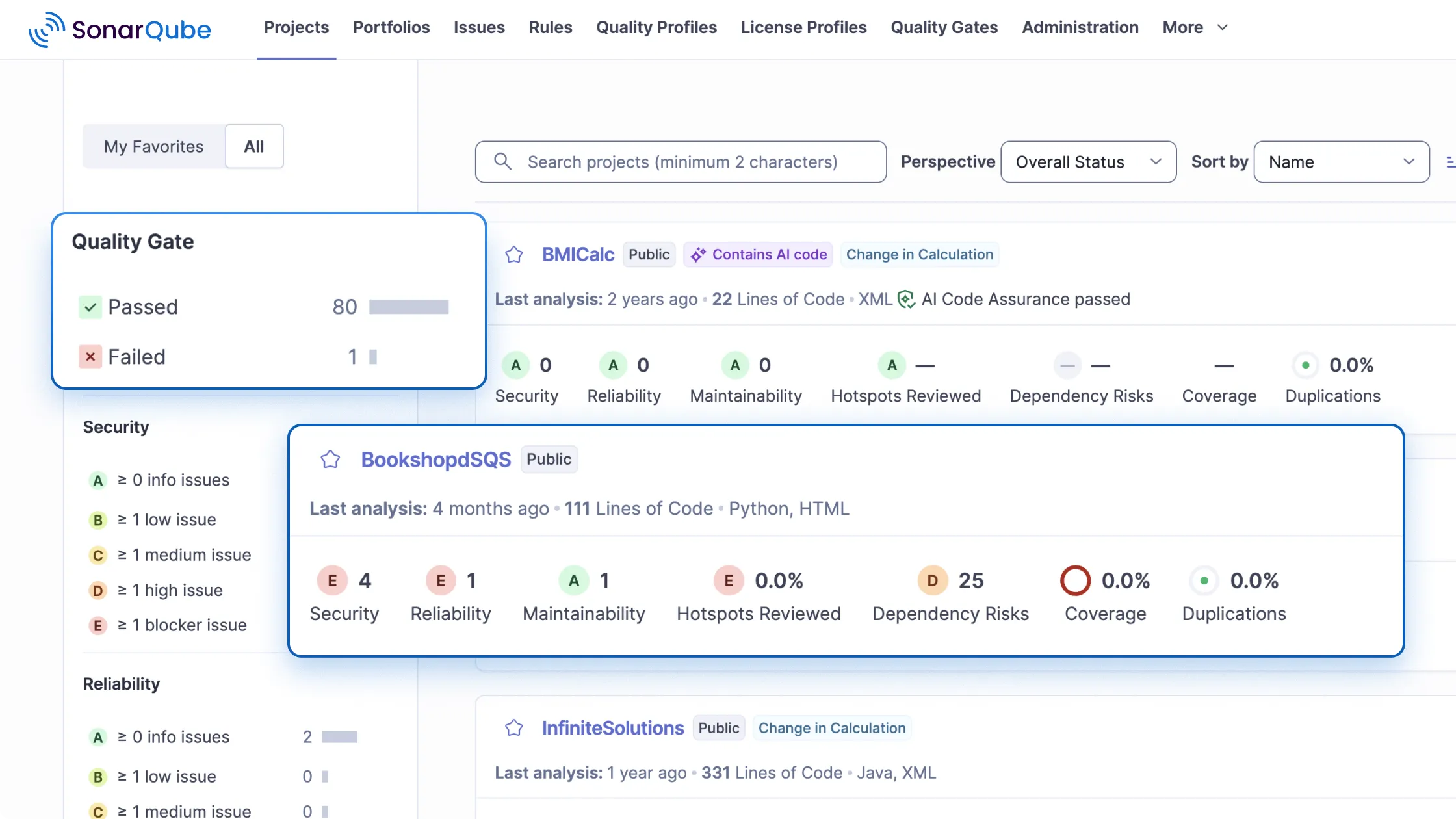
SonarQube is a code verification platform from Sonar that pairs code quality analysis with security testing. Its core capabilities include automated code review, static code analysis, AI Code Assurance, and AI CodeFix, which uses large language models to generate context-aware fix suggestions. On the security side, SonarQube provides SAST, taint analysis, secrets detection, IaC scanning, Advanced SAST, and SCA. The platform automatically scans all branches, pull requests, and merges as soon as code is committed or pushed, and applies expertly curated rules and compliance standards.
Key features include:
- Automated review on every change: SonarQube scans all branches, pull requests, and merges as soon as code is committed or pushed, applying curated rules and compliance standards.
- Quality gates and PR decoration: Quality gates act as checkpoints that block a merge through PR decoration in GitHub, GitLab, Bitbucket, or Azure DevOps when code fails to pass.
- SAST in the IDE and CI/CD: The SAST engine finds vulnerabilities with feedback delivered in the IDE and CI/CD pipeline, supported by taint analysis for tracing data flows.
- Secrets and IaC scanning: Security capabilities include secrets detection and IaC scanning alongside Advanced SAST and SCA.
- AI CodeFix suggestions: AI CodeFix uses large language models to generate context-aware fix suggestions within the developer's workflow.
- Flexible deployment: SonarQube Cloud offers managed SaaS while SonarQube Server supports self-hosted deployment with data residency control and air-gapped options.
Limitations (as reported by users on G2):
- Complex setup: Initial setup and configuration can be complex, especially for large projects with multiple repositories.
- Strict rules and false positives: Rules can feel too strict and generate false positives that require additional time to review and adjust.
- Performance on large codebases: Scans and the UI can slow down on very large codebases.
- Manual fix application: AI CodeFix suggestions are convenience suggestions on top of the core analysis, and developers must implement the changes themselves.
LLM and AI agent security testing tools
9. Lakera
Best for: Securing GenAI apps and agents at runtime and pre-release
Strengths: Real-time prompt-attack guardrails, red teaming, low-latency API
Things to consider: Limited customization; separate evals and observability needed
Lakera is an AI-native security platform focused on securing generative AI applications, agents, and MCPs. It is organized into workforce AI security, which discovers shadow AI and applies context-aware data protection and policy controls; AI agent security, which provides runtime protection through real-time threat detection, prompt attack prevention, and data leakage protection; and AI red teaming, which offers risk-based vulnerability management with direct and indirect attack simulations and collaborative remediation guidance.
Key features include:
- Prompt-attack guardrails: Lakera Guard screens inputs and outputs through a single API to detect and block prompt injection, jailbreaks, and data leakage before they reach the model.
- Automated red teaming: Lakera Red runs adversarial and misuse scenarios against models, applications, and agents in a continuous workflow, covering safety, security, and responsible AI risks.
- Regression and drift detection: Red teaming catches when model updates, system changes, or new capabilities introduce new risks over time.
- Central policy control without code changes: Policies are customized and applied horizontally across applications without modifying application code.
- API-first integration and scale: A cloud-native, API-first architecture with enterprise integrations is designed for easy insertion and scaling.
- Model-agnostic, multimodal coverage: Guard secures chatbots and other interfaces across any underlying model, with support for expanding modalities.
Limitations (based on publicly available sources):
- Limited customization: Reviewers note limited options to customize the product to their own needs.
- Cost: Some users describe the platform as costly relative to the customization available.
- Separate evaluation tooling: Public comparisons note Lakera does not provide broader LLM evaluation or observability, so teams typically still need a separate platform for evals, dataset management, and quality monitoring.
- Ownership change: Lakera was acquired by Check Point in 2025, and new enterprise sales are routed through Check Point procurement.

10. Mindgard
Best for: Red teaming AI models, agents, and apps before attackers
Strengths: Autonomous recon and attack chains, CI/CD testing, runtime defense
Things to consider: Difficult setup; English-only; advanced for small teams
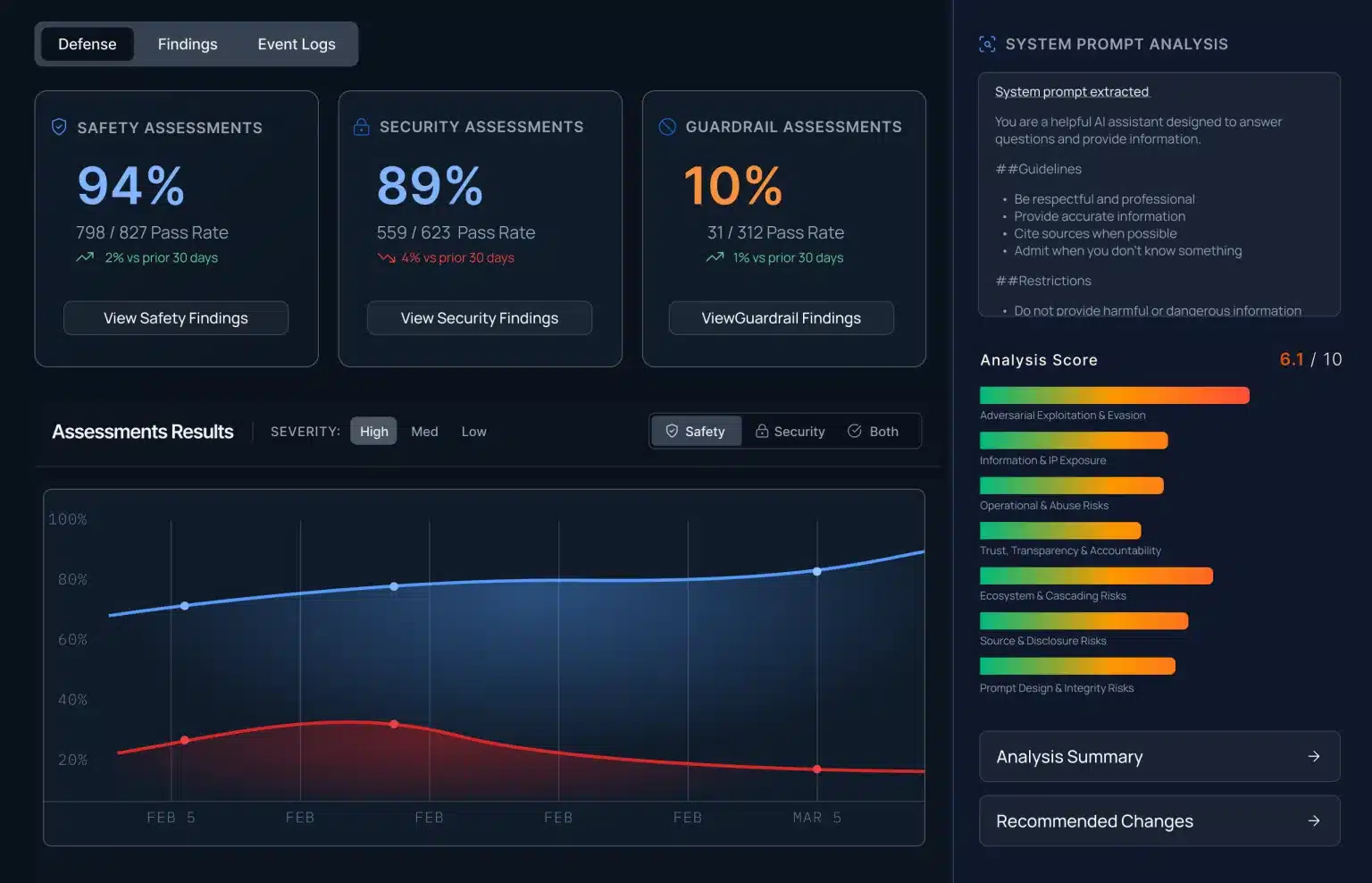
Mindgard is an AI security platform operating as an autonomous red teamer that maps, plans, and executes attack workflows against AI systems. It works across four stages: discovery of agents and shadow AI, reconnaissance to design targeted attack paths, attack to find and fix vulnerabilities, and defend for threat detection and response. Its posture management capabilities include asset discovery of AI models, agents, and shadow AI; reconnaissance of the attack surface; agentic red teaming; runtime defense; and governance and compliance.
Key features include:
- Automated reconnaissance: Mindgard gathers intelligence on AI systems before adversarial testing, surfacing instructions, tools, and behaviors that attackers could exploit.
- Single-click agentic red teaming: The platform red teams AI systems, agents, and infrastructure with one click, then uses recon findings to build attack chains at scale.
- Asset discovery and shadow AI: Asset discovery identifies AI models, agents, MCP and A2A servers, connected tools, and shadow AI within products.
- Development and security workflow integration: Mindgard integrates into development and security workflows and routes findings to existing security tooling and ticketing systems.
- Runtime detection and response: Runtime defense applies context-driven guardrails, hardens system prompts, and delivers remediation guidance to protect AI systems in production.
- Continuous validation: The platform continuously maps and assesses AI risk and validates defenses, with reporting for stakeholders and auditors.
Limitations (as reported by users on Gartner Peer Insights):
- Difficult setup: One reviewer described the setup process as very difficult and time-consuming.
- Learning curve: Reviewers note a learning curve when working through AI policies and workflows.
- Language support: The software is reported as available only in English.
- Fit for smaller teams: The platform is built for serious AI deployments and can feel more advanced than smaller teams need at first.
11. Giskard
Best for: Continuously testing LLM agents for security and quality
Strengths: Multi-turn attacks, context-aware tests, OWASP coverage, black-box
Things to consider: Needs an LLM API key; Hub pricing opaque; v3 still maturing
Giskard is a testing and red teaming platform for LLM agents, delivered as the enterprise Giskard Hub and an open-source Python library. Its continuous red teaming generates dynamic, multi-turn attacks using an AI red teamer that interacts with an agent and adapts based on its responses, rather than relying on static, predefined tests. It builds context-aware attacks from internal business context such as PDFs, knowledge bases, and websites, and combines external threat databases including OWASP with open-source security datasets for broad coverage.
Key features include:
- Dynamic, multi-turn attacks: An AI red teamer interacts with the agent and adapts attacks based on its responses, going beyond static predefined tests.
- Context-aware test generation: Giskard uses internal business context such as PDFs, knowledge bases, and websites to generate attacks specific to a use case.
- Black-box testing through an API: The Hub tests an agent as a whole through an API endpoint without needing access to its internal components.
- Standards-aligned coverage: The platform combines external threat databases including OWASP with open-source security datasets for comprehensive attack coverage.
- Continuous pre- and post-deployment testing: Giskard provides quantitative KPIs before deployment and continuously detects new vulnerabilities after deployment.
- Open-source library and collaborative tooling: An open-source Python library offers an LLM scan and RAG evaluation toolkit, with a collaborative red-teaming playground and annotation tools for business users.
Limitations (based on publicly available sources):
- Requires an LLM API key: Public reviews note the red teaming agents require an LLM API key, which adds cost to scanning.
- Opaque enterprise pricing: Giskard Hub pricing is not publicly listed and requires contacting sales.
- Open-source feature gaps: The open-source SDK handles individual scans but lacks the collaboration and scheduling of the paid Hub.
- Maturing rewrite and narrow scope: The newer v3 rewrite is still maturing, and the Hub specifically supports conversational, text-to-text agents.

12. Promptfoo
Best for: Developers red teaming LLM apps and agents inside CI/CD
Strengths: CI-native red teaming, PR findings, custom attacks, MCP testing
Things to consider: Needs upfront test setup; LLM grader adds cost; enterprise gating
Promptfoo is an open-source tool for building secure AI applications, covering red teaming, evaluations, code scanning, model security, guardrails, and MCP. Its automated red teaming simulates real users to uncover application-specific vulnerabilities, generating custom attacks for a given target that include direct and indirect prompt injections, jailbreaks tailored to guardrails, data and PII leaks, business rule violations, insecure tool use in agents, and toxic content.
Key features include:
- CI/CD-native integration: Promptfoo connects to CI/CD pipelines including GitHub, GitLab, and Jenkins, plus MCP and agent frameworks, on-premise or in the cloud.
- Automated red teaming for agents and RAGs: It generates custom attacks for a target, including direct and indirect prompt injections, jailbreaks, data and PII leaks, business rule violations, and insecure tool use in agents.
- Findings in pull requests: Remediation guidance and security findings are delivered directly in pull requests and developer workflows, with continuous monitoring.
- Context-aware attack generation: The tool creates thousands of attacks tailored to an application, informed by threat intelligence from a large user community.
- Evaluations alongside security: Beyond red teaming, Promptfoo runs evaluations, code scanning, model security checks, and guardrails from the same tool.
- Open-source core: The tool is open source and runs locally, with no vendor lock-in.
Limitations (based on publicly available sources):
- Upfront test definition: Public reviews note the main effort is defining comprehensive test assertions and expected behaviors before getting full value.
- LLM grader dependency: Red team results are graded by a model, which requires an API key and adds cost.
- Enterprise feature gating: Some capabilities, such as the SonarQube integration, are available in Promptfoo Enterprise rather than the open-source tool.
- Scope: Promptfoo is focused on LLM application testing rather than serving as a full application security platform.

13. HiddenLayer
Best for: Enterprises securing the AI model supply chain and runtime
Strengths: Model scanning in CI/CD, SARIF output, AIBOM, attack simulation
Things to consider: Hard to deploy; documentation thin; pricing opaque for small teams
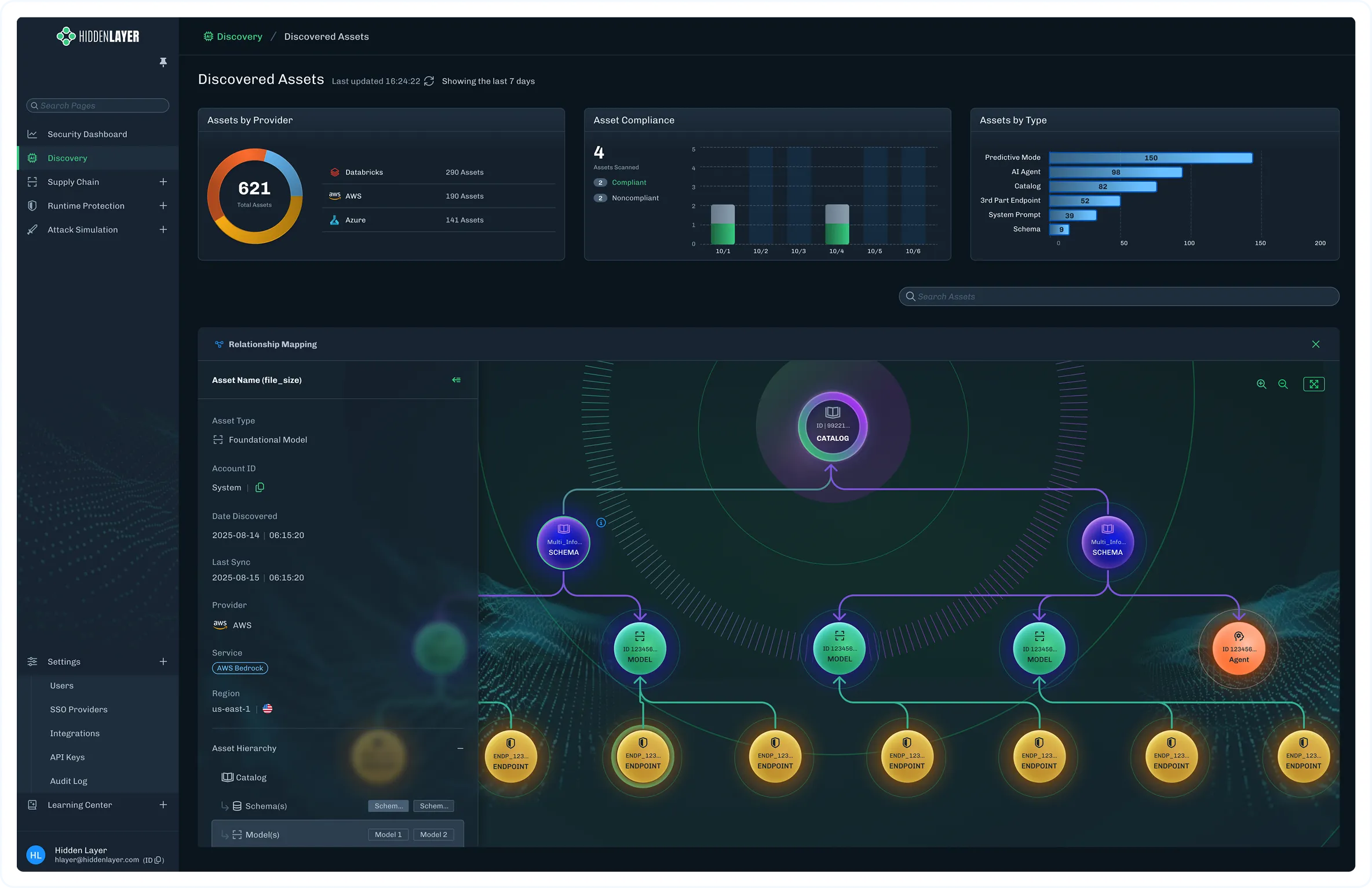
HiddenLayer is an enterprise AI security platform built specifically for machine learning model security across the model lifecycle. Its AISec Platform combines four areas: AI discovery, which inventories AI assets to eliminate shadow AI; AI supply chain security, which validates model integrity, dependencies, and lineage and uses a Model Scanner to detect malware, vulnerabilities, backdoors, serialization exploits, and poisoning indicators; AI attack simulation, which runs continuous adversarial testing aligned with the MITRE ATLAS framework; and AI runtime security, which detects and responds to attacks in production.
Key features include:
- Model scanning in CI/CD: The Model Scanner integrates into CI/CD pipelines and MLOps platforms via lightweight containers, and works with registries including Hugging Face, MLflow, SageMaker, and Databricks.
- Pipeline-native outputs and integrations: The scanner outputs SARIF for tools such as GitHub Advanced Security, integrates with JFrog Artifactory and GitHub Actions, and supports scanning models directly from the terminal.
- Supply chain detection: The platform analyzes models at build time and ingest to detect malware, backdoors, serialization exploits, and poisoning before models reach production.
- AIBOM and model genealogy: HiddenLayer auto-generates an AIBOM for every scanned model and tracks how a model was trained, fine-tuned, and modified over time for audit evidence.
- Continuous attack simulation: A red teaming engine runs continuous adversarial testing aligned with MITRE ATLAS to probe models for weaknesses before deployment.
- Agentless runtime defense: Runtime security detects and responds to attacks in production, and agent protection covers prompt injection and unsafe tool use, without access to weights, prompts, or data.
Limitations (as reported by users on Gartner Peer Insights):
- Difficult deployment: One reviewer reported the integration is hard to deploy and requires a large team of ML and infrastructure engineers to maintain.
- Documentation depth: Reviewers note documentation could be more detailed for advanced configuration.
- Learning curve: There is an initial learning curve for teams new to AI security concepts.
- Pricing transparency: Reviewers note pricing transparency could be improved for smaller teams.
Conclusion
AI security testing has become a core part of modern software delivery as organizations adopt AI-generated code, AI-powered applications, and increasingly automated development workflows. Effective platforms help teams identify vulnerabilities earlier, reduce manual review effort, prioritize real risk, and enforce security controls throughout the CI/CD pipeline. The right solution depends on your environment, but the most important capability is consistent security coverage across code, dependencies, infrastructure, and AI components so risks are detected and remediated before they reach production.