Table of contents
Related resources


Checkmarx SCA: key features, limitations, and six alternatives

What is Checkmarx SCA?
Checkmarx SCA (software composition analysis) is a tool that identifies and manages risks in open source dependencies used by an application. It scans direct and transitive dependencies, detects known vulnerabilities, and maps them to public databases such as CVE records. Your developers see which third-party components are in their software and whether those components introduce security, license, or compliance risks.
Checkmarx SCA integrates into development workflows, CI/CD pipelines, and source code repositories. It prioritizes findings by severity, exploitability, and available remediation options. It also reports on open source licenses and dependency health, so teams can decide when to select, update, or replace a package.
Key features of Checkmarx SCA
Checkmarx SCA’s features cover four areas: vulnerability detection, dependency analysis, license review, and remediation support.
- SCA scan accuracy: Checkmarx SCA aims to detect open source vulnerabilities with high accuracy. Fewer false positives means less time reviewing findings that don’t affect your applications.
- Deep dependency scanning: The tool analyzes both direct and transitive dependencies. Many open source risks come from packages that other components pull in indirectly.
- Malicious package protection: Checkmarx SCA helps identify malicious open source packages. This lowers the risk of harmful code arriving through dependency confusion, compromised packages, or other supply chain attacks.
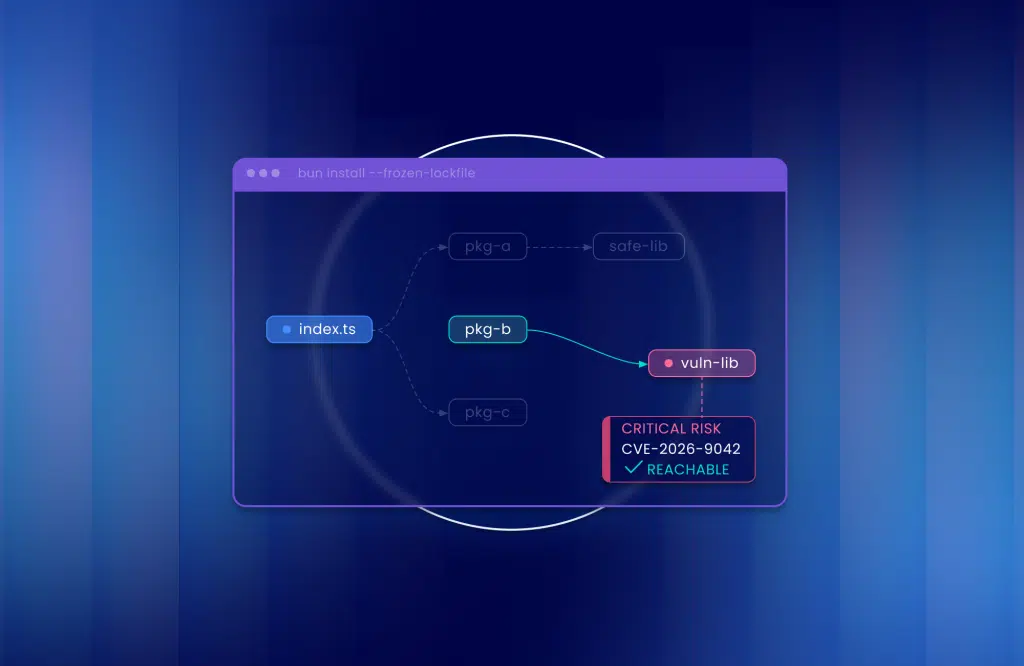
- Reachability analysis: The tool checks whether vulnerable code is reachable from the application. Teams can then prioritize the issues most likely to be exploitable in real use.
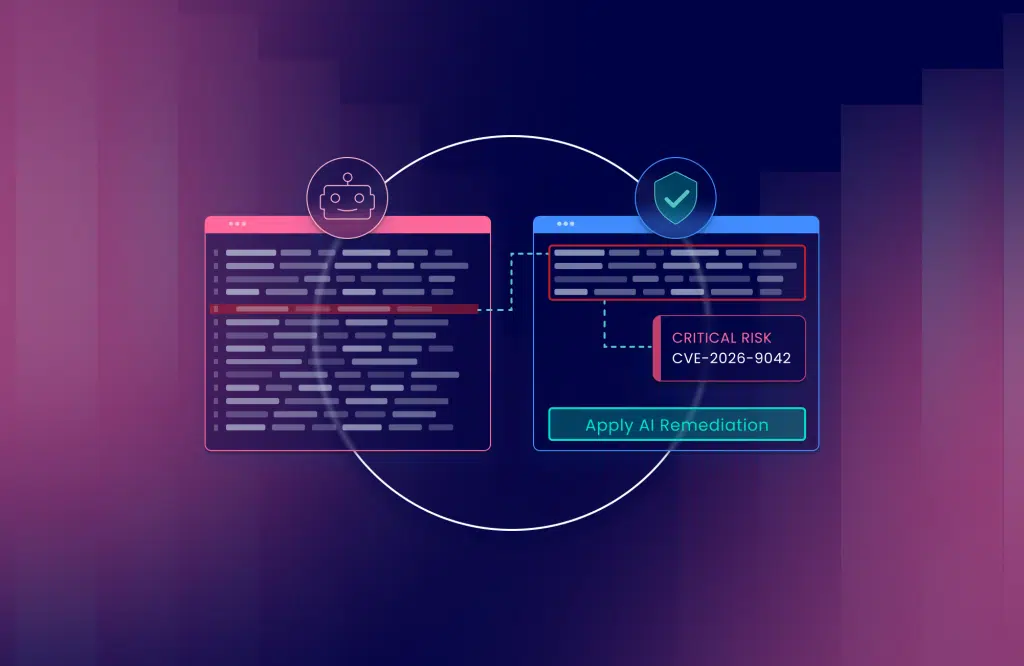
- Actionable remediation guidance: Checkmarx SCA provides guidance for fixing open source risks. That includes identifying safer package versions and explaining how to address vulnerable dependencies.
- Policy automation: Teams can use automated policies to manage open source risk consistently. Policies enforce security, compliance, and licensing requirements, so you don’t rely on manual review alone.
- License risk management: Checkmarx SCA identifies license risks in open source components. You can see whether a package’s license creates legal or compliance concerns.
- Software bill of materials: The tool creates a software bill of materials (SBOM), which gives teams an inventory of the open source components in their applications. Security and compliance processes can draw on that inventory.
Understanding how Checkmarx SCA scans run
Checkmarx SCA scans typically follow three stages: file analysis, dependency resolution, and evidence analysis.
1. File analysis
During file analysis, the tool examines project files to identify open source packages. It compares file metadata and hashes against a package database to determine which third-party components are present. For supported archive formats such as JAR, WAR, EAR, and ZIP files, the tool extracts the contents and analyzes them recursively to find embedded dependencies.
2. Dependency resolution
After file analysis, Checkmarx SCA can build the dependency tree using package manifests such as package.json, or it can use lock files such as package-lock.json, yarn.lock, and similar formats. With lock files, the tool identifies the exact versions of direct and transitive dependencies that were installed.
That gives you a more accurate and reproducible view of the application’s dependency tree. Without lock files, dependency resolution relies on manifest files and the current state of package repositories. Results can be less consistent.
3. Evidence analysis
Once it has identified dependencies, Checkmarx SCA runs evidence analysis. It compares the discovered packages against vulnerability, malware, and license risk databases. From that comparison, it determines which risks affect the application and generates findings for review and remediation.
Scan methods
Checkmarx SCA supports multiple scan methods. You can start a scan through:
- Web portal
- Checkmarx One platform
- Command-line
- CI/CD plugins
- Checkmarx SCA Resolver
Key limitations of Checkmarx SCA
Checkmarx SCA gives broad visibility into open source risks, but users on G2 report limitations in scan results, usability, reporting, and performance.
- False positives require additional validation: Users report that scans can generate false positives. Security and development teams then spend extra time validating findings before they act.
- Duplicate findings can increase report noise: Some reports may contain duplicate or repeated findings, which makes reports longer and harder to review.
- Longer scan times for large projects: Scan performance can slow down when analyzing large codebases or complex applications with many dependencies.
- Verbose reporting: Reports can be so detailed that the most important issues are hard to spot and prioritize.
- Inconsistent results across scanning tools: Some users have observed differences between Checkmarx scan results and findings produced by other security scanning tools, which adds review and reconciliation work.
- User interface learning curve: New users may find the interface and workflow difficult to learn at first, which lengthens onboarding.
- Setup can be time-consuming: Initial deployment and configuration can take considerable effort, particularly in larger environments or complex development workflows.
- Resolved issues may still appear in reports: Users have reported cases where findings remain visible after remediation, which makes it harder to confirm a fix worked.
- Support response times may vary: Some users report delays when seeking assistance from customer support.
- Cost considerations: Licensing and operational costs can strain a limited security budget, particularly when you’re evaluating several application security tools.
Checkmarx SCA alternatives at a glance
These limitations lead many teams to compare alternatives. The table below summarizes how the tools in this article differ, and the sections that follow cover each one in detail.
| Category | Solution | Best for | Key strengths | Things to consider |
|---|---|---|---|---|
| Dedicated SCA tools | Mend SCA | Open source risk in AI powered development | Reachability, auto-remediation, malicious package detection | Large rollouts need planning |
| Dedicated SCA tools | Snyk Open Source | Developer-first risk management across the SDLC | Risk Score prioritization, one-click fix PRs, IDE/CI integration | CLI monitoring gaps; bulk result handling limited |
| Dedicated SCA tools | Black Duck SCA | License compliance and SBOM governance | Multi-technique detection, BDSA advisories, policy enforcement | Complex setup; slower large scans; premium pricing |
| AppSec and supply chain platforms | Endor Labs | Cutting dependency-alert noise | Function-level reachability, upgrade impact analysis, patches | Newer vendor; UI/setup rough spots; enterprise pricing |
| AppSec and supply chain platforms | Veracode SCA | Open source risk within an AppSec platform | Vulnerability Method Analysis, malicious package blocking, SBOM | High false positives; costly; dated UI; slow large scans |
| AppSec and supply chain platforms | Semgrep Supply Chain | Finding reachable vulnerabilities with low noise | Codebase-aware reachability, upgrade guidance, malware blocking | Out-of-box noise needs tuning; rule learning curve |
Notable software composition analysis tools
How we selected these tools: We shortlisted software composition analysis tools based on their ability to identify open source dependencies, detect known vulnerabilities, flag malicious packages, surface license risks, and support remediation across the software development lifecycle.
Dedicated software composition analysis tools
1. Mend SCA
Best for: Reducing open source risk in AI powered development workflows.
Strengths: Reachability analysis, automated remediation, and malicious package detection.
Things to consider: Larger rollouts benefit from planning.
Mend SCA identifies, prioritizes, and remediates security and license risks in the open source components your application depends on. It traces the full call graph through direct and transitive dependencies to determine whether your application invokes a vulnerable function. It then ranks findings by combining that reachability data with CVSS 4.0 severity and EPSS exploit-probability scoring. Mend SCA also detects malicious packages, enforces license policies, and generates and ingests software bills of materials.
Key features include:
- Reachability analysis: Traces the call graph through direct and transitive dependencies to show whether the application invokes a vulnerable function, and deprioritizes findings that aren’t reachable.
- Risk-based prioritization: Combines CVSS 4.0 severity scoring with EPSS exploit-probability data and reachability to order vulnerabilities.
- Malicious package detection: Flags typosquats, dependency-confusion attacks, and packages containing data-exfiltration or backdoor code using threat intelligence.
- License compliance and policy enforcement: Detects copyleft, permissive, and dual licenses, issues real-time alerts, and can block license violations before they enter the codebase.
- SBOM generation and ingestion: Produces SBOMs in SPDX and CycloneDX, ingests third-party SBOMs, and applies VEX data.
- Developer workflow integration: Connects with IDEs, repositories, registries, and CI/CD pipelines, and surfaces findings inside AI code assistants before commit.
Limitations (as reported by users on G2):
- Validation of findings: Some users note that scans can surface findings that need manual validation, and that license mapping is not always exact.
- Onboarding at scale: Larger deployments need careful planning to configure well.
- Support response times: Some users report that support response times can vary.

Source: Mend.io
2. Snyk Open Source
Best for: Developer-first open source risk management across the SDLC.
Strengths: Risk Score prioritization, one-click fix pull requests, and IDE and CI integration.
Things to consider: The CLI has monitoring gaps, and bulk result handling is limited.
Snyk Open Source is a developer-first SCA tool for finding, prioritizing, and fixing vulnerabilities and license issues in open source dependencies. It surfaces vulnerable dependencies in the IDE and CLI as code is written, scans pull requests before merging, adds guardrails to CI/CD pipelines, and tests the live environment. Snyk ranks findings with a Risk Score that weighs severity alongside reachability, exploit maturity, and EPSS and CVSS scores.
Key features include:
- Developer-first scanning: Finds vulnerable dependencies in the IDE and CLI as code is written, in pull requests, in CI/CD pipelines, and in the live environment.
- Risk Score prioritization: Ranks vulnerabilities using severity plus reachability, exploit maturity, and EPSS and CVSS scores, refined by business and application context.
- Automated fix pull requests: Opens one-click pull requests with required upgrades and patches, with customizable PR templates.
- Continuous monitoring: Monitors projects for newly disclosed vulnerabilities after deployment.
- License compliance: Checks dependencies for license issues and evaluates compliance against security and license policies.
- Reporting and governance: Provides real-time and historical reporting for security and GRC teams, with SBOM support on enterprise plans.
Limitations (as reported by users on Gartner Peer Insights):
- CLI monitoring gaps: Reviewers note the CLI lacks real-time vulnerability monitoring.
- Bulk result handling: Results and reporting can be edited per individual finding rather than in bulk.
- Tiered features: License compliance, reporting, and security policy management are available only on higher-tier plans.

Source: Snyk
3. Black Duck SCA
Best for: Open source license compliance and SBOM governance at scale.
Strengths: Multi-technique detection, Black Duck Security Advisories, and policy enforcement.
Things to consider: Complex setup, slower large scans, and premium pricing.
Black Duck SCA manages security, quality, and license compliance risks in open source and third-party code. It combines dependency, binary, and snippet analysis to identify components in source code, artifacts, and compiled binaries, and matches them against a component database that is human-validated by its Cybersecurity Research Center. Black Duck Security Advisories add vulnerability detail and remediation guidance beyond public databases.
Key features include:
- Multi-technique detection: Combines dependency, binary, and snippet analysis to identify components in source code, artifacts, and compiled binaries.
- Knowledge base and advisories: Matches components against a human-validated component database and Black Duck Security Advisories for vulnerability detail and remediation guidance.
- Undeclared and custom component detection: Finds dependencies that are not explicitly declared, including in languages without package managers such as C/C++, and detects internal and third-party components.
- SBOM management: Imports SBOMs to map dependencies and exports them in SPDX and CycloneDX formats.
- Policy management and enforcement: Defines custom security and license policies and enforces them automatically across IDEs, CI pipelines, and pre-deployment.
- AI model visibility: Discovers open source and third-party AI models in projects and surfaces their origin and license obligations.
Limitations (as reported by users on Gartner Peer Insights):
- Setup complexity: Onboarding and configuration can be complex.
- Scan performance: Scans can take time on large codebases.
- Detection gaps: Some users report inaccurate component detection and false alarms when scanning C/C++ built with certain build systems.
- Reporting and interface: Reports can be difficult to interpret for non-security teams, and the interface can feel less intuitive.
- Cost: Licensing and deployment costs are described as premium and can grow with larger codebases.

Source: Black Duck
Application security and supply chain platforms with SCA
4. Endor Labs
Best for: Cutting dependency-alert noise with reachability analysis.
Strengths: Function-level reachability, upgrade impact analysis, and backported patches.
Things to consider: A relatively new vendor, some UI and setup rough spots, and enterprise pricing.
Endor Labs provides software composition analysis with function-level reachability analysis as part of a software supply chain security platform. It uses program analysis to map direct and transitive dependencies, including AI models and services, and determines whether the application calls a vulnerable function in a dependency.
Key features include:
- Function-level reachability: Uses program analysis to determine whether the application calls a vulnerable function in a dependency.
- Dependency discovery: Inventories direct and transitive dependencies, including AI models and services, and exports SBOM and VEX documents.
- Risk prioritization: Combines reachability, EPSS exploit probability, and CVSS severity to surface the most dangerous vulnerabilities.
- Upgrade impact analysis: Identifies which upgrades can be made without breaking changes and flags those that require more effort.
- Automated remediation: Opens automatic pull requests and provides Endor Patches that backport fixes for libraries that are hard to upgrade.
- Container scanning: Extends scanning to container images alongside source dependencies.
Limitations (as reported by users on G2):
- Interface and setup: Some users say the UI and UX need refinement and that project setup could be easier.
- Vendor maturity: Reviewers note the risk associated with a relatively new vendor.
- Pricing: Pricing can be a barrier for smaller organizations.
- Feature gaps: Some users report gaps in coverage and occasional false positives.

Source: Endor Labs
5. Veracode Software Composition Analysis
Best for: Open source risk management within a broader application security platform.
Strengths: Vulnerability Method Analysis, malicious package blocking, and SBOM generation.
Things to consider: High false positives, higher cost, a dated interface, and slow large scans.
Veracode Software Composition Analysis identifies and acts on open source risks as part of the Veracode application security platform. Its Vulnerability Method Analysis pinpoints where application code interacts with risks in libraries and components and prioritizes findings using exploit paths and dependency relationships.
Key features include:
- Vulnerability Method Analysis: Pinpoints where application code interacts with risks in libraries and prioritizes using exploit paths and dependency relationships.
- Malicious package detection: Uses machine learning and threat intelligence to detect and block malicious packages.
- Proprietary vulnerability database: Surfaces known, hidden, and emerging risks, including vulnerabilities not yet listed in the NVD.
- Automated remediation: Provides auto-pull requests and best-fix actions to remediate license and vulnerability risks in the development environment.
- Dependency graphs: Maps direct and indirect dependencies and prioritizes those on the execution path.
- SBOM generation: Generates and scans SBOMs in CycloneDX and SPDX formats.
Limitations (as reported by users on PeerSpot):
- False positives: Users report high false-positive rates that require triage.
- Cost: Pricing is described as costly, with increases over time.
- Scan times: Scans can take a long time on large applications.
- Interface and coverage: The interface is described as dated and rigid, and some users note limited language support and lag on newer framework versions.
- License model: Licensing based on application count is viewed as inflexible.

Source: Veracode
6. Semgrep Supply Chain
Best for: Finding reachable open source vulnerabilities with low noise.
Strengths: Codebase-aware reachability, AI powered upgrade guidance, and malware protection.
Things to consider: Out-of-the-box noise needs tuning, and rule writing has a learning curve.
Semgrep Supply Chain is a software composition analysis tool that detects vulnerabilities introduced by open source dependencies, built on the Semgrep detection engine shared across its SAST and secrets products. Its codebase-aware reachability analysis reduces noise by identifying which dependency vulnerabilities are reachable. It also applies LLM reasoning grounded in static analysis to explain upgrade complexity and impact.
Key features include:
- Codebase-aware reachability: Reduces noise by determining which dependency vulnerabilities are reachable in the codebase.
- Upgrade guidance: Uses LLM reasoning grounded in static analysis to explain upgrade complexity and impact.
- Breaking change detection: Flags line-level breaking changes for package upgrades.
- Malware protection: Detects and blocks open source malware with malicious dependency detection, impact analysis, and enterprise policies.
- Dependency resolution: Provides dynamic dependency resolution for projects with missing or incomplete lockfiles and scans transitive dependencies.
- SBOM and licensing: Generates SBOMs and supports enforcement of open source license requirements.
Limitations (as reported by users on G2):
- Out-of-the-box noise: Reviewers note noisy results with false positives that require upfront tuning and rule customization.
- Rule learning curve: Writing and fine-tuning custom rules can be difficult for newcomers.
- Scan speed: Scans can be slow on large monorepos.
- Tiered depth: Deeper analysis capabilities are tied to the paid platform.

Source: Semgrep
Conclusion
Every tool in this comparison scans dependencies and matches them to known vulnerabilities. What separates them is how much of that output your developers have to triage by hand, and the user reviews above show false positives and report noise as a recurring complaint for most of them. Before you compare feature lists, run each tool on one of your own repositories and count how many findings are reachable.