Table of contents
Patch faster isn’t the answer. Patch smarter is.

The 30-day patch cycle is dead. Most security teams already know this. What they haven’t fully reckoned with is why it died, and what has to replace it. SC Media recently gathered a range of security leaders on exactly this shift, and the picture they described is stark.
AI didn’t just add more vulnerabilities to the pile. It collapsed the time between disclosure and exploitation from weeks to hours. Microsoft’s July release patched more than 600 bugs in a single Patch Tuesday, on the heels of a record 206 flaws the month before. In the same week, CISA pushed emergency patch orders for Oracle E-Business and Microsoft SharePoint, and researchers documented a full ransomware operation executed start to finish in under 24 hours.
Recent Cloud Security Alliance research puts a number on the danger. Only 9% of organizations remediate critical vulnerabilities within 24 hours. Among the teams that take four to seven days, 97% report an incident tied to a known vulnerability during that window. The gap between disclosure and exploitation isn’t shrinking. It’s gone.
Faced with that math, more analysts and longer hours were never going to be the fix. The fix is deciding what actually matters before you patch anything at all.
Most of what you’re patching was never the threat
Every scanner produces a wall of critical findings. Almost none of that wall is reachable in your environment. Security researchers now put the number of genuinely exploitable findings at around 1% once real network topology and code paths are accounted for.
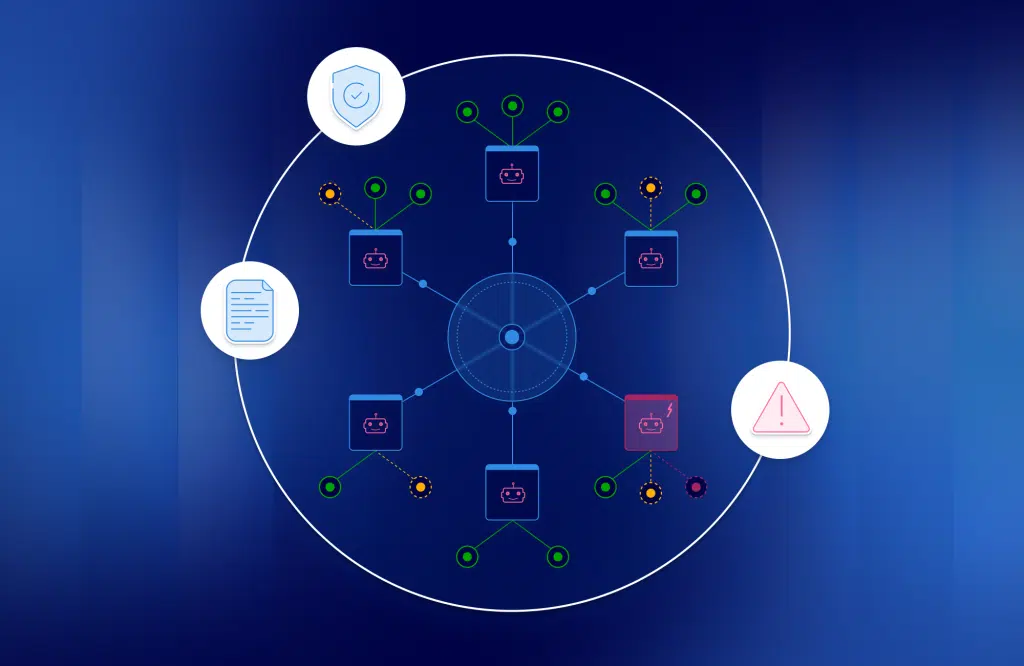
That’s the math Mend Reachability Analysis is built around. Instead of asking whether a vulnerability is severe, it asks the question that actually determines risk: can an attacker’s path reach this code at runtime? A critical CVE sitting in a function that’s never called isn’t a critical problem. A moderate one sitting in an internet-facing entry point is.
This is where CVSS-only triage falls apart. The National Vulnerability Database has stopped enriching most CVEs, which means severity scores alone now miss roughly a third of what’s actually being exploited. Reachability, combined with exploit intelligence like CISA’s Known Exploited Vulnerabilities catalog and EPSS scoring, gives teams a short list instead of a long one. Racing to patch code an attacker can’t touch burns your scarcest resource on the wrong target.
Remediation has to move at the speed of disclosure, not the speed of a ticket
Recent research on remediation workflows found that 74% of organizations still run more than half of remediation manually, while only 7% report full automation. Teams have automated the alarm. They haven’t automated the response. That’s the real bottleneck, and it’s why AI-generated discovery makes the backlog worse instead of better if remediation doesn’t change too.
The fix isn’t calendar-based patching with a shorter calendar. It’s a closed loop that runs continuously: detect, prioritize, act, verify. That loop is what Mend Remediate is built to run.
Prioritization has to combine exploit activity, exposure, and business context, not a CVSS number in isolation. Low-risk, repeatable fixes need to be pre-authorized to move without a human clicking approve on every one. When there’s no available patch, teams need an immediate fallback: virtual patching, a configuration change, or a segmentation rule that closes the attack path without waiting on a vendor. And closing a ticket is not the same as closing the exposure. Every fix needs an automatic rescan to confirm the risk actually left the environment.
None of this replaces the people who set policy, define risk tolerance, and handle the exceptions that don’t fit a rule. It moves them out of the repetitive work AI can validate on its own, and into the decisions only a human should make.
What manual updates really cost you
The engineering hours, the patch latency, the open risk window. See the model behind 90%+ efficiency gains and build the business case in your own numbers.

Dependency updates can't be a once-a-quarter project
A huge share of what security teams patch isn't application code at all. It's the open source dependencies underneath it, and those update on their own schedule, constantly, whether a team is watching or not.
Mend Renovate keeps that update pipeline continuous instead of episodic. Instead of a quarterly dependency-upgrade project that's stale by the time it ships, updates get proposed, tested, and merged on an ongoing basis, scoped to what's actually safe to change. Paired with reachability data, Renovate can prioritize the updates that close an exploitable path first, rather than working through a dependency tree alphabetically.
This is what turns patch management from a periodic scramble into infrastructure. The update pipeline runs whether or not this week's CVE count sets a record.
Speed without judgment just moves the risk around
The teams standing up best against this shift aren't the ones patching fastest. They're the ones who can answer two questions in minutes instead of days: is this reachable, and does it matter right now. Everything else, including the actual fix, follows from getting those two questions right.
That's the case for treating reachability, automated dependency management, and continuous remediation as one connected system instead of three separate tools bolted together after the fact. AI raised the cost of guessing. It didn't remove the need for judgment. It just moved judgment earlier in the process, to the moment a finding shows up, instead of the moment someone finally gets around to it.
The patch window isn't coming back. The teams that adapt are the ones building for the world where it's already gone.
Automate dependency updates
About the author