Table of contents
The ECB just gave banks four months to fix AI vulnerability gaps. Most of the work starts in the software supply chain.

On July 7, 2026, the European Central Bank sent a letter to the CEO of every bank it directly supervises with an unambiguous instruction: build a formal action plan against AI-enabled cyberattacks, and submit it to your supervisory team by October 31.
The letter, signed by supervisory board chair Claudia Buch, is one of the most detailed regulatory playbooks yet published on frontier AI cyber risk. And its scope is wider than the “European” label suggests: the euro-area subsidiaries of JPMorganChase, Goldman Sachs, Citi, and Morgan Stanley are ECB-supervised, so they face the same deadline as any bank in Frankfurt or Paris. American Banker reports that while no U.S. regulator has set a comparable requirement, major U.S. institutions are already being “inundated with questions” from supervisors about the same risks. The ECB letter is a preview of what’s coming everywhere.
Here’s what stands out when you read the letter itself: a substantial share of what the ECB is demanding lives in the software supply chain: the third-party software, open source components, and development pipelines that banks have spent the last decade wiring into everything.
Why now: exploits in minutes, not weeks
The ECB’s diagnosis is blunt. Emerging AI models can identify software vulnerabilities and generate functioning exploits “at unprecedented speed, compressing the timeline between vulnerability discovery and exploitation.” Buch calls it “a long-term shift in the threat landscape rather than a temporary phenomenon or a risk tied to any single tool.”
The same day, the European Systemic Risk Board issued a formal warning that frontier models can run fully automated attacks and build working exploits in “minutes or hours” where human experts once needed “days or weeks,” a shift the board called a “collapse of defensive time buffers.” Its deeper concern is scale: if a wave of critical vulnerabilities hits many institutions at once, there is “no fully effective mitigation framework available.”
That concern isn’t hypothetical. Earlier this year, Anthropic reported that a tightly restricted frontier model had found thousands of previously unknown vulnerabilities across major operating systems and browsers. The UK’s NCSC, cited in the ECB letter’s own annex, has told defenders to prepare for a “vulnerability patch wave.”
The math is simple and uncomfortable. When exploit development collapses from weeks to minutes, every process that assumes a human-speed window (monthly patch cycles, quarterly dependency reviews, annual pen tests) is operating on borrowed time.
What the ECB actually requires
The action plan due October 31 must contain concrete measures, named owners, allocated budget and staffing, and implementation timelines, all framed as meeting existing obligations under the Digital Operational Resilience Act (DORA), the EU regulation we’ve covered since before it took effect. The letter’s annex spells out six focus areas. Three of them speak directly to application security and the software supply chain.
Attack surface protection starts with knowing what you have. The letter’s first short-term priority is identifying ICT assets, “including third-party software and open-source components,” as “key to prioritising remediation efforts.” You cannot defend, patch, or decommission what you haven’t inventoried, and for most banks the least-inventoried layer is the open source dependency tree underneath their applications.
Vulnerability and patch management must accelerate “at scale.” The ECB anticipates “more frequent and higher-volume patching” as “vendors and open-source communities – as well as internally developed software – identify and remediate vulnerabilities faster.” It recommends prioritized vulnerability scanning and explicitly endorses AI-based defensive tooling, provided it comes with safeguards, human oversight, and robust risk management.
Security-by-design reduces the problem upstream. Among the structural measures: “software development practices based on security-by-design, with appropriate consideration of secure code alongside delivery timelines, can reduce vulnerabilities before deployment.” Fewer flaws shipped means fewer emergency patches later: the only sustainable answer to an attacker who never sleeps.
The remaining areas (monitoring and detection, governance and supply chain assurance, and operational resilience) pull in the same direction. Boards must verify that ICT budgets, staffing, and tooling can support accelerated patching, and institutions must understand their ICT providers’ “preparedness for accelerated vulnerability disclosure and patching.”
The ECB even cleared the calendar to make room: the annual IT Risk Questionnaire deadline moved from September 2026 to February 2027 so banks can focus on this.
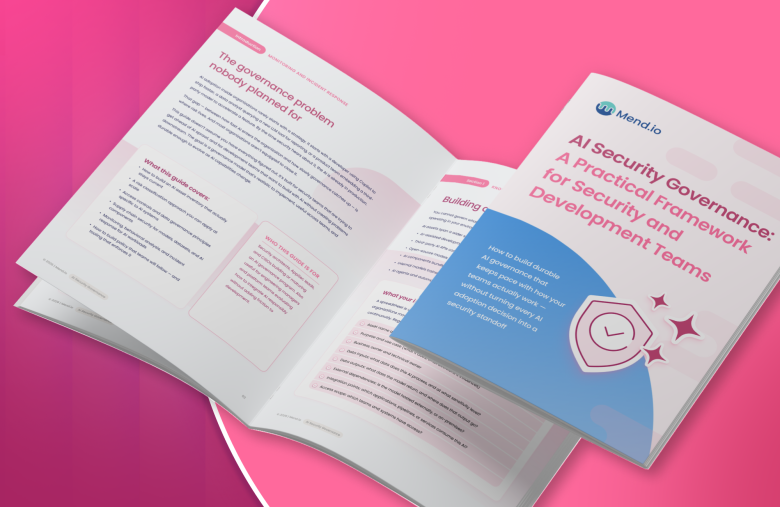
You can’t govern AI you can’t see
Build a governed AI inventory, classify risk by data sensitivity and decision authority, and score your maturity without slowing your teams down.
The gap between the mandate and Monday morning
For most security teams, the honest reaction to "accelerate patch management at scale" is: with what capacity?
We recently analyzed over 1,000 recovered AI agent attack sessions from a real intrusion, and the finding matches the ECB's diagnosis exactly: the attacker wasn't exploiting exotic AI-discovered zero-days. He was weaponizing known, published CVEs against exposed infrastructure, at machine speed, around the clock. The doors were known and closable. The gap wasn't knowledge; it was time.
That's the triage problem the ECB is now making a board-level obligation. The typical enterprise application is mostly code the organization didn't write (open source packages, transitive dependencies, vendor components) and backlogs run to thousands of findings. When the window between disclosure and exploitation shrinks to hours, "we'll get to it next sprint" becomes a risk acceptance decision, one the ECB expects boards to formally own, with metrics and tolerance thresholds written into risk appetite frameworks.
Manual processes don't scale to this. That's not a vendor talking point; it's the premise of the ECB's own letter, which is why it endorses AI-enabled defense and prioritized scanning rather than simply telling banks to try harder.
Meeting the mandate: automate the half you can
This is where a modern application security platform maps directly onto the ECB's checklist.
Know your attack surface, including the open source layer. Mend.io builds a complete, continuously updated inventory of every open source and third-party component in your applications, including transitive dependencies, expressed as standards-based SBOMs. That answers the letter's first requirement (asset identification as the basis for prioritized remediation) and gives supply chain assurance teams the evidence trail DORA reviewers ask for.
Prioritize like the regulator says to. The ECB calls for "prioritised vulnerability scanning" because raw CVE counts are unmanageable. Mend.io's reachability analysis distinguishes vulnerabilities in code your applications actually execute from those in dormant paths, so teams spend their compressed remediation window on the exposures an AI-assisted attacker could actually reach.
Patch at machine speed. "Higher-volume patching" is precisely what dependency automation exists for. Mend Renovate automatically detects outdated and vulnerable dependencies, opens tested update pull requests, and keeps thousands of repositories current without consuming engineer hours, turning the patch wave from a staffing crisis into a background process. This is the "AI-based tools... with adequate safeguards [and] human oversight" pattern the ECB describes: automation proposes, humans approve, everything is logged.
Shift security before deployment. The letter's security-by-design expectation is met in the pipeline, not in production. Mend SAST and container scanning catch flaws in first-party code and images before release, and Mend AI extends the same discipline to the newest attack surface: AI models, agents, and AI-generated code entering your applications.
None of this covers everything the ECB wants; decommissioning legacy core systems, network segmentation, and crisis exercises are infrastructure work no AppSec platform does for you. But the software supply chain portion of the mandate is the portion you can automate, and automating it frees the humans for the parts you can't.
Don't wait for your regulator's letter
The OCC has already said AI is "significantly transforming the cyber threat landscape." The Bank of England, FCA, and HM Treasury issued a joint statement on frontier AI and cyber resilience in May. FS-ISAC has published sector advisories on AI-enabled vulnerability discovery. The Five Eyes agencies have issued a joint statement. The ECB letter is simply the first with a date attached, and Buch has already promised a follow-up on post-quantum cryptography.
If you're an ECB-supervised institution, October 31 is your deadline for a plan, which means the inventory, prioritization, and automation groundwork needs to start now. If you're not, treat this as the free preview it is.
Either way, the first step is the same one the ECB put at the top of its list: know exactly what's in your software.